
September Restart How Veteran Employment Programs Help Transition Into Fall Stability
Why September Marks a Critical Transition Point for Veterans
Summer’s slowdown in the job market doesn’t have to be permanent. For veterans transitioning out of service, September represents something far more significant than just the start of a new month. It’s a reset button on employment prospects, a moment when hiring managers refocus on staffing needs and organizations dust off their recruitment plans after the summer lull. Understanding why this timing matters could be the difference between months of stalled job searches and landing meaningful work that builds toward stable, long-term career growth.
Veterans often describe the summer months as a frustrating pause in their employment journey. Hiring freezes stretch longer than expected. Decision-makers take extended time off.
Recruitment budgets sit untouched. But this isn’t just a minor inconvenience. For someone who’s already navigated the unique barriers that come with leaving military service, this seasonal stagnation can feel like a setback that threatens financial stability and forward momentum.
The good news: this pattern is entirely predictable. And that means it’s entirely actionable.
Understanding the seasonal shift in hiring and organizational planning
Corporate hiring doesn’t move at a constant pace throughout the year. Most organizations operate on rhythms that peak and valley based on budget cycles, leadership priorities, and operational needs. Summer, unfortunately, lands in a valley for many industries.
Managers are on vacation. Hiring committees dissolve. And new job requisitions get pushed to the back burner while teams manage with existing staff.
September changes that dynamic overnight. By early fall, organizations have completed their summer assessments. They know which positions stayed vacant all season. They understand where gaps exist in their teams. And they’ve had time to allocate budget specifically for filling those holes before the final quarter of the year pushes operations into overdrive.
For veterans, this shift creates a genuine window of opportunity. Employers actively hiring in September aren’t settling for candidates. They’re being intentional about building teams for the final stretch of the fiscal year and beyond. That means positions are more abundant, hiring managers are more available, and the overall pace of recruiting accelerates significantly.
How fiscal year changes create new employment opportunities
Many organizations operate on fiscal years that don’t align with the calendar. For federal contractors and government agencies (major employers of veterans), fiscal year 2025 ends September 30th. That deadline triggers a cascade of activity. Budget must be spent or lost. Hiring quotas must be met. New initiatives need staffing before the next fiscal year begins.
This fiscal year reality is more than just a scheduling technicality. It creates genuine urgency in hiring pipelines. A position that’s been open for three months suddenly becomes a priority because there’s a hard deadline to fill it. Veterans who understand this timing and position themselves to apply in late August or early September are swimming with the current instead of against it.
Additionally, new fiscal years bring new organizational strategies and expansion plans. Companies that survived on reduced budgets all summer suddenly have resources to pursue growth initiatives. That translates to new positions being created specifically for fall hiring. Using veteran employment programs and career coaching services through organizations like Operation Family Fund means staying informed about these timing patterns and positioning yourself to capitalize on them. The resources available through grant and career can help you understand these cycles and prepare your applications strategically.
Breaking the cycle: moving from summer stagnation to fall momentum
Summer unemployment feels different from other seasonal pauses. The weight of months without interviews builds frustration. Confidence dips. Self-doubt creeps in. And by August, many veterans have mentally settled into the belief that their job search is simply stalled indefinitely.
But September momentum is real, and it’s recoverable. Veterans who’ve experienced this transition describe a dramatic shift. Suddenly, applications generate responses. Phone screens schedule faster. Hiring managers become available for conversations. The entire pace of recruitment accelerates.
The key is positioning yourself to take advantage of this shift before it happens. That means refreshing your resume in August, not September. It means researching organizations that operate on fiscal years ending this month. It means connecting with veteran employment support networks early so you’re ready to move quickly when opportunities open. Understanding how operation family fund can provide the guidance you need to prepare strategically.
The summer-to-fall employment transition isn’t random chance. It’s a predictable pattern built into how organizations operate. Veterans who recognize this timing and prepare accordingly don’t just benefit from seasonal hiring spikes. They actively shift their career trajectory from stagnation into genuine stability and growth.
Core Support Services That Accelerate Career Readiness
Resume translation: converting military experience into civilian language
One of the biggest obstacles veterans face when entering the civilian job market is the language barrier. Your military experience is genuinely valuable, but “managed logistics for a 200-person combat support unit” doesn’t automatically translate to what hiring managers are looking for on a resume. The gap between military terminology and civilian job descriptions can cost you interviews before anyone even meets you.
Resume translation starts with identifying the core competencies beneath your military roles. Did you lead a team? That’s management experience.
Did you maintain equipment under strict protocols? That’s quality assurance and process compliance. Did you manage supply chains or schedules?
That’s operations expertise. The skills are there, but they need to be reframed for employers who’ve never worn a uniform.
A strong veteran employment program teaches you to highlight measurable outcomes using civilian language. Instead of listing “maintained Top Secret security clearance,” employers want to see “managed sensitive information with zero compliance violations.” Instead of “supervised eight personnel,” you’d write “led cross-functional team, improved efficiency by 15%.” The accomplishments stay the same, but the vocabulary shifts to what corporate recruiters understand.
The most effective approach involves working with career coaches who understand both military and civilian contexts. Programs like those through the uso partnership builds initiative help you decode your own experience. You’ll learn which military certifications carry weight in specific industries, which achievements matter most to employers, and how to present gaps or transitions as strengths rather than complications.
September is the ideal time for this work. Resume refreshes take two to three weeks when you’re focused, and having your materials polished before the fall hiring cycle means you’re ready to move fast when opportunities appear.
Interview preparation tailored to veteran backgrounds and experiences
Interviews intimidate most candidates, but veterans often face an additional layer of complexity. Civilian interviewers may not understand military culture, rank structures, or the nature of your service. They might ask questions that seem obvious to you but confusing to them, or vice versa. Interview coaching tailored specifically for veterans bridges that gap.
Good veteran employment programs teach you how to tell your story in ways that resonate with civilian hiring managers. This doesn’t mean downplaying your service or pretending those experiences didn’t shape you. It means translating the impact of your leadership, decision-making under pressure, or technical expertise into language that connects with someone whose background is entirely different.
One critical skill is learning how to address service-related transitions without creating hesitation. If you left your last role due to a service-connected injury, program counselors help you frame this honestly but strategically. You’re not hiding anything; you’re presenting your narrative in a way that emphasizes your current capabilities and what you’re ready to contribute, not what held you back.
Mock interviews are where this preparation becomes real. You’ll practice handling tough questions: gaps in employment, career changes, or challenges related to your transition. When you’ve already answered “Tell me about a time you failed” in a structured setting with feedback, the actual interview feels manageable. Programs focusing on career readiness often include multiple practice rounds, video review of your responses, and personalized coaching on your communication style.
Veterans also benefit from understanding workplace culture differences. The directness, hierarchy, and communication norms in military settings don’t always match civilian corporate environments. Being aware of these differences before you walk into an interview room gives you confidence and adaptability, which employers notice immediately.
Skills assessment and career pathway mapping for sustainable placement
Landing a job is one thing. Landing a job that actually fits your skills, interests, and long-term goals is what creates stability. This is where comprehensive skills assessment becomes critical. Rather than applying to anything that’s hiring, structured veteran employment programs help you identify what you’re genuinely good at and where those skills have value in the civilian market.
A thorough assessment goes beyond your military role. It looks at transferable skills, technical certifications, educational background, and even personality traits that predict job satisfaction. An IT specialist in the military might transition to cybersecurity, systems administration, or network infrastructure management.
A logistics officer could thrive in supply chain management, procurement, or operations management. The pathways exist, but you need clarity about which one fits you.
Career pathway mapping takes this further. Once you understand your strengths, programs help you identify realistic next steps. Do you need additional certifications? Is your education current? What’s the actual job market demand in your target field? Programs assess these questions honestly, which saves you time and money pursuing paths that don’t align with your goals or the market reality.
This process also considers what sustainable means for you personally. If you need financial stability, the right placement isn’t just about salary. It’s about predictable hours, remote options if needed, supportive management, and growth potential. Programs that incorporate your whole situation, not just your resume, lead to placements that actually stick.
September placements based on solid skills assessment and pathway planning tend to be more durable. When you’re moving into a role that genuinely matches your capabilities and interests, you’re far more likely to build momentum through fall and beyond.
Building Long-Term Stability Through Structured Programs
Comprehensive job training and certification opportunities
September represents a fresh start for veteran employment. Many programs recognize this timing and ramp up their training offerings specifically to capitalize on momentum. Structured job training and certification create the foundation that separates veterans from simply looking for work to actually landing roles that stick.
When you complete a recognized certification, you’re not just adding a line to your resume. You’re demonstrating to employers that you’ve invested time in skills that directly translate to their needs. Veterans often find that certifications in project management, IT security, commercial driving, welding, and skilled trades open doors faster than general applications ever could. These programs typically run 8 to 16 weeks, which means a veteran starting in September can be certified and job-ready by November or early December.
The best programs don’t just teach skills in isolation. They build employment readiness alongside technical competency. That means resume polishing, interview coaching, and salary negotiation guidance happen as part of the certification. Some programs even include employer partnerships, so hiring managers are already aware of graduates before they officially finish. Veterans who complete va benefits 2025 paired with hands-on certifications report significantly faster employment timelines.
Mentorship partnerships with veteran-led organizations and employers
Mentorship works differently for veterans than standard workplace coaching. A veteran mentor understands the specific transition challenges: the communication style differences, the adjustment to civilian hierarchy, the frustration of explaining military experience to people who’ve never served. They’ve lived it. That credibility matters more than any generic career coach could provide.
Organizations and employers invest in veteran mentorship because it reduces turnover and accelerates integration into teams. When a veteran has a mentor who’s walked the same path, they’re far more likely to push through the initial discomfort and stay committed to the role. Mentors help translate military accomplishments into civilian language, coach through cultural friction points, and provide accountability that keeps momentum going through those vulnerable first months on the job.
Many veteran-led organizations specifically match mentors based on career field and military background. An Army logistics veteran might mentor someone transitioning into supply chain management. A former Navy IT specialist guides new cybersecurity professionals.
These aren’t random pairings. The specificity creates immediate relevance. Mentors also connect veterans to professional networks and industry events that accelerate career development beyond just the initial placement.
Ongoing support systems that extend beyond initial placement
Here’s where most employment programs fail veterans. They celebrate the job offer, then disappear. Real stability requires support that extends months past day one. The critical 30-90 day window after employment is when many veterans struggle most. They’re navigating new workplace culture, adjusting to civilian management styles, and often dealing with stress responses they didn’t anticipate.
Structured ongoing support addresses these challenges directly. Check-ins with a career counselor at week two, week six, and week twelve help catch problems before they become job-ending issues. Some programs include peer support groups where veterans in their first months of employment can share what they’re experiencing. Knowing you’re not alone in feeling overwhelmed by seemingly small corporate politics matters more than you’d think.
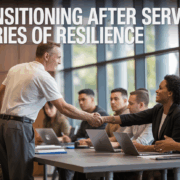
Financial stability programs often run parallel to employment support. Even when a veteran lands a job, there’s typically a gap between when work starts and when the first paycheck arrives. If rent is due on the first of the month and employment begins mid-month, that gap creates stress that can undermine the entire transition. Transitioning After Service: shows how comprehensive programs bridge these gaps with temporary assistance, making sure a new job doesn’t create immediate financial crisis.
Ongoing support also includes skill development beyond the initial certification. As veterans advance, they need coaching on leadership development, salary negotiation, and career pivoting. Programs that provide this extended guidance create pathways to long-term career stability rather than just temporary employment. Veterans deserve support systems designed for their real, complex transitions, not just job placement.
Leveraging Government and Private Sector Resources
Understanding VA employment benefits and tuition assistance programs
The VA’s employment and education benefits represent some of the most underutilized resources available to transitioning veterans. Many who leave service don’t fully grasp how these programs can accelerate their path toward stable, meaningful work. September is the ideal time to audit what’s actually available to you and your family.
The primary tool here is the VA’s Vocational Rehabilitation and Employment (VR&E) program, also called Chapter 31. This benefit covers career counseling, education, training, and job placement assistance for eligible veterans with service-connected disabilities. But here’s the thing: you don’t need to be rated 100 percent disabled to qualify.
Veterans with 10 percent or higher ratings and an employment barrier may access these services. The program can fund everything from trade certifications to four-year degrees, plus living stipends while you’re in school.
Beyond VR&E, the Post-9/11 GI Bill remains the gold standard for education funding. It covers tuition, fees, books, and housing allowances at approved institutions. The Yellow Ribbon Program adds another layer, covering costs that the GI Bill doesn’t fully meet at private and graduate institutions.
Many veterans assume they’ve used up their benefits or don’t have remaining eligibility. That’s worth verifying directly with the VA. Hundreds of dollars in unused tuition assistance sit dormant because veterans never asked.
Then there’s the VA’s Work-Study program, which combines employment with education. You work part-time for the VA (often remotely) while pursuing your degree, earning an hourly wage plus keeping your educational benefits intact. It’s a practical way to build employment experience while completing your training.
Start by checking your Certificate of Eligibility and remaining benefit balance. Use the VA’s eBenefits portal or contact your regional VA office. If education isn’t your path right now, the VA Employment Services program connects you directly with disabled veterans’ outreach program specialists who identify jobs matching your military background and skill set.
Connecting with employers committed to hiring veterans
Private sector employers have never been more focused on military talent. The challenge isn’t finding employers willing to hire veterans. It’s connecting with the right ones, fast, in September when hiring momentum picks up heading into Q4.
Organizations like the Military Officers Association of America, American Corporate Partners, and Hiring Our Heroes run structured employer networks specifically designed around veteran placement. These aren’t job boards. They’re vetted employer partnerships with hiring managers who understand military culture, hierarchies, and the specific value service members bring.
Many offer resume reviews, interview coaching, and direct introductions to hiring contacts. That’s dramatically different from submitting applications into a void.
Several employers have made public commitments to veteran hiring targets. Companies like Amazon, Accenture, and JPMorgan Chase actively recruit military talent and offer accelerated pathways from service to employment. In September, many launch targeted hiring campaigns tied to fiscal year planning. This timing alignment matters more than you might think.
National resource hubs like Veterans.gov and Indeed’s Veterans Hub aggregate job postings from veteran-focused employers. But the real advantage comes through programs like uso partnership initiatives, where you gain both employment readiness training and direct employer access. These structured programs compress what might otherwise take months into weeks.
Look specifically for employers offering military skills bridges, which translate military certifications and experience into civilian-recognized credentials at no cost. This is particularly valuable if your military role doesn’t have a direct civilian equivalent.
Accessing funding for education, licensing, and professional development
Education and professional development often require upfront costs that create barriers even when benefits theoretically cover them. Understanding what resources exist for these gaps is essential.
Beyond the GI Bill, the VA’s Vet Success on Campus program stations veterans’ coordinators at colleges nationwide. They handle tuition verification, benefits troubleshooting, and connection to campus resources. Some schools also offer veteran-specific scholarships and fee waivers that layer on top of VA benefits, covering remaining gaps.
For licensing and certification (commercial driving licenses, medical certifications, trade licenses), the VA’s Veteran Readiness and Employment program covers exam fees, study materials, and testing costs. Many states also reimburse veterans for licensing exams in specific high-demand fields like nursing, construction trades, and IT certifications.
If you’re pursuing a degree or certification and federal benefits still leave gaps, foundation grants and nonprofit aid exist specifically for this purpose. Organizations supporting veteran education often fund tuition shortfalls, living expenses during training, or materials costs. The key is identifying these sources early, which means starting your research and applications in September rather than waiting until enrollment deadlines arrive.
Wondering how to navigate these options or what you actually qualify for? The process can feel overwhelming, but support exists. Learning how to apply gives you clarity on which resources match your specific situation and timeline.
Addressing Common Barriers to Employment Success
Managing service-related health considerations in the workplace
Veterans often face unique health challenges that directly impact workplace performance and stability. Service-related injuries, chronic pain, hearing loss, and invisible conditions like PTSD don’t disappear once you’re sitting at a desk. The reality is that managing these health considerations while building employment stability requires planning, communication, and sometimes accommodation.
One of the first steps is understanding what accommodations you’re legally entitled to under the Americans with Disabilities Act (ADA). If you have a service-connected disability rating, you already understand how documentation matters. That same principle applies in civilian employment.
Getting a clear diagnosis and accommodation letter from your VA healthcare provider gives you concrete language to share with your employer’s HR department. You don’t need to disclose your entire military medical history, but being upfront about specific, manageable needs builds trust and prevents misunderstandings down the road.
Practical workplace adjustments often cost employers very little but make an enormous difference for you. Flexible break schedules for medication management, the ability to work from home certain days, ergonomic workspace setup, or modified lighting can transform your ability to sustain employment long-term. The key is approaching these conversations professionally.
Frame accommodations as tools that help you perform at your best, not as limitations. Employers genuinely want stability from their hires, and accommodation discussions are part of that conversation.
Mental health is equally critical. If you’re managing service-related anxiety, sleep disruption, or hypervigilance, civilian employment counselors and career coaches can help you develop coping strategies specific to office environments. Many veteran employment programs now include mental health support as part of their services, recognizing that financial stability depends on both job placement and ongoing psychological wellness.
Navigating the transition from military structure to civilian workplace culture
Military structure is built on clarity, hierarchy, and mission focus. Everyone knows the chain of command, expectations are explicit, and accountability is immediate. Civilian workplaces operate differently, and that difference can feel jarring even after months of employment.
In the military, you followed orders. In civilian settings, there’s often negotiation. Deadlines are sometimes fluid.
Authority isn’t always obvious. The dress code might seem bizarrely casual, but social hierarchies can be surprisingly rigid. These cultural mismatches trip up veteran employees more often than lack of actual job skills.
You might be the most qualified person in the room but feel completely out of place because nobody’s communicating like you expected.
Understanding office dynamics takes intentional observation. Notice how your coworkers handle disagreements. Watch how information flows.
Pay attention to unwritten rules about break times, meeting participation, and communication channels. In the military, you’d ask your squad leader. In civilian work, you might need to read the room first before asking your manager.
This isn’t weakness or indecision, it’s cultural intelligence.
Many veteran employment programs now include workplace culture coaching specifically designed to bridge this gap. You’ll learn that pushing back respectfully on a timeline isn’t insubordination, it’s called project management. Asking for feedback isn’t weakness, it’s professional development.
Building relationships with coworkers outside structured hierarchies is how teams actually function. These conversations happen in structured programs, making the transition feel less like failure and more like translation.
Finding your people matters too. Veteran employee resource groups, informal networks, and mentorship from other former service members can provide immediate cultural translation while you’re settling into civilian work patterns.
Building confidence and overcoming imposter syndrome in new roles
Even highly skilled veterans struggle with impostor syndrome in new employment. You might have led teams, managed million-dollar operations, or made decisions under extreme pressure. But suddenly you’re in a civilian role thinking you don’t belong. That disconnect is real and more common than you’d think.
Part of this stems from how military credentials translate (or don’t) to civilian hiring. Your leadership experience is legitimate, but civilian hiring managers might not immediately see it. Your technical skills from military training might require certification updates. That gap between your actual competence and what’s on paper can create self-doubt that sabotages otherwise solid performance.
Combat veteran employment programs emphasize reframing your experience in civilian language. You didn’t just “follow procedures under pressure.” You managed complex systems with minimal margin for error. You didn’t just “communicate with your unit.” You coordinated across multiple departments with competing priorities. Learning to tell your story in civilian terms rebuilds the confidence that should come from genuine accomplishment.
Mentorship accelerates this process dramatically. When another veteran or experienced coworker validates your capabilities and helps you see your transferable skills, impostor syndrome loses its grip. The support services embedded in grants, aid, often include this crucial mentorship component, connecting you with people who’ve already navigated this transition successfully.
Creating Your Personal Stability Strategy for Fall and Beyond
Setting realistic career goals aligned with personal values and family needs
The transition into fall employment stability isn’t about chasing any job that comes along. It’s about building a career path that actually fits your life, your family’s needs, and what matters to you after service. This clarity becomes the foundation for sustained success rather than short-term fixes.
Start by reflecting on what drove your military service. That same sense of purpose can guide your civilian career choices. Maybe you were a mechanic in the Navy and want to leverage that skill in the private sector.
Maybe leadership was your strength, and you’re drawn to supervisory roles. Maybe you value serving others and see meaning in healthcare, education, or nonprofit work. These aren’t random preferences—they’re the signals that point toward roles where you’ll stay engaged and motivated long-term.
Family needs matter equally in this equation. If you have dependents, the salary range, schedule stability, and benefits package directly impact household stability. A position with flexible hours might outweigh slightly higher pay if it lets you be present for your family.
Health insurance coverage, retirement planning, and paid time off aren’t luxuries—they’re practical components of real stability. When you align your career goals with these tangible family priorities, you’re building sustainability, not just employment.
Veteran employment programs help you translate these values into actionable objectives. Career counselors work with you to map realistic timelines. If you’re targeting a specific field, they help identify the credentials, certifications, or experience gaps you need to bridge.
They also help you recognize that career goals evolve. Your September goal might be landing your first civilian role in your field. Your one-year goal might be advancing into a lead position.
Your three-year goal might be stability with growth potential. Each builds on the last.
Building a support network within your community and veteran peer groups
Employment stability doesn’t happen in isolation. The connections you build—both within your veteran community and beyond—directly affect your resilience when challenges arise. Your peer network becomes your sounding board, your accountability partner, and sometimes your lifeline.
Veteran peer groups offer something no other network can: they understand the specific pressures of post-service transition. These peers have navigated similar barriers, faced comparable doubts, and solved real problems. Monthly veteran employment meetups, online forums, and mentorship connections provide ongoing support as you work through the fall transition.
You’re not starting from scratch trying to explain military culture or service-related challenges. Your peers get it immediately.
But your support network shouldn’t be limited to veterans alone. Building relationships with mentors in your target industry, coworkers, supervisors, and community members creates a broader safety net. These connections generate job leads, offer advice on workplace dynamics, and remind you that you’re part of a larger community.
When financial stress hits (and for many veteran families, it does), this network becomes crucial. Community organizations, faith-based groups, and local resources often step in to help, but they’re much more effective when you’ve already built relationships there.
Organizations that provide assistance to veteran families often emphasize community connection for exactly this reason. When you need to access emergency rental assistance, temporary financial support, or employment coaching, the relationships you’ve already built make accessing those services smoother and less isolating. You’re reaching out to people who already know you, not starting from zero with a stranger.
Planning for financial security and long-term career progression
September stability is a starting point, not a final destination. Real financial security requires thinking beyond your next paycheck to what comes next year, five years out, and through major life transitions.
Begin by establishing a realistic emergency fund within your first employment months. Veterans often face unexpected costs—vehicle repairs, medical bills, family emergencies—that derail progress if there’s no cushion. Even a modest emergency fund (one to two months of essential expenses) prevents a crisis from becoming catastrophic. Veteran employment programs often include financial literacy coaching that helps you build this systematically, not through willpower alone.
Career progression requires intentional planning. What skills do you need to advance? What certifications or education strengthen your position?
Some employers offer tuition assistance or professional development budgets. Others have clear promotion pathways. Understanding these structures early lets you make targeted decisions about where to invest your time and energy.
A role with strong advancement potential might outweigh a higher immediate salary if it sets you on a sustainable career trajectory.
Consider also how benefits like VA education benefits, apprenticeships, or employer-sponsored training connect to your long-term security. Veterans transitioning into fall employment shouldn’t overlook these resources. They’re specifically designed to support your career development beyond the initial placement.
When you layer these advantages—steady employment, active career planning, skill development, and family-focused financial management—you’re not just surviving the transition. You’re building genuine stability that lasts.
As you move through fall and into the months ahead, remember that stability isn’t a single achievement. It’s the result of consistent choices aligned with what matters most to you and your family. Veteran employment programs exist to support exactly this kind of intentional, values-driven transition. Your job now is to engage fully with the support available, maintain connections with your peers and community, and stay focused on the bigger picture you’re building. If you’re seeking additional resources to support your transition, organizations dedicated to helping veteran families stand ready to help. Take the next step today, and build the fall stability you’ve earned.
Related Posts
- Operation Family Fund Kicks Off
- First Donation to Operation Family Fund Comes from Eleven Year-Old
- Operation Family Fund to Exhibit at Upcoming 2007 Gold Coast Navy Show
- Operation Family Fund Raises Over One Million Dollars in Donations
- Santa Barbara Harley Davidson & Dr. Laura Host Motorcycle Show and Benefit for Operation Family Fund
- Santa Barbara Couple Donates $5,000 to Operation Family Fund in Support of Our Troops
- USO Partnership Builds Veterans Leadership Skills
- Navigating Life After Service: How Operation Family Fund Supports Veterans’ Transition in 2025
- VA Benefits 2025 Update: What Every Veteran Family Should Know
- Building Financial Stability: Grants, Aid, and Career Coaching for Veteran Families
- Transitioning After Service: Stories of Resilience & Support with OFF
- Honoring Service Beyond the Uniform: How Operation Family Fund Helps Veterans Rebuild Their Lives