Community Partnership Models How Faith-Based Organizations Amplify Veteran Assistance Impact
Understanding Faith-Based Organization Partnerships in Veteran Care
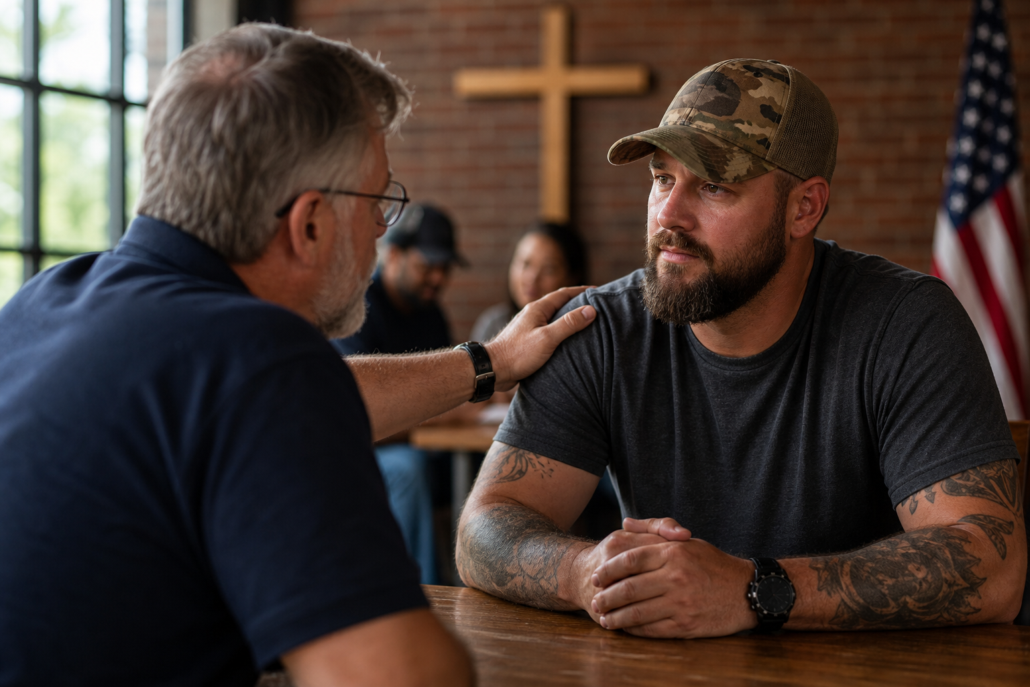
When a veteran facing financial hardship walks through the doors of a faith-based organization, something powerful happens. Beyond the immediate assistance with rent, food, or utilities, there’s a recognition that healing involves more than money. It involves community, purpose, and belonging.
Faith-based organizations bring a distinct approach to veteran support that reaches into spaces where purely secular programs sometimes miss the mark. They understand that many veterans carry invisible wounds alongside visible ones, and that addressing both requires a different kind of partnership.
The landscape of veteran assistance has evolved significantly. What once looked like isolated charitable efforts has transformed into intentional community partnership models where religious congregations, nonprofits, government agencies, and local businesses work in concert. These partnerships aren’t accidental.
They’re built on the recognition that veterans need more than a single solution. They need a network of support that meets them at every point of crisis, whether that’s immediate housing, employment placement, mental health services, or long-term stability. Faith-based organizations have become central anchors in these networks, not because they’re the only ones who care, but because they operate from a foundation that values both the practical and the spiritual dimensions of recovery.
The unique role of religious communities in addressing veteran needs
Religious communities occupy a position that few other organizations can claim. They already exist in neighborhoods and towns. They have trust built over generations.
Most importantly, they understand that veterans aren’t just looking for a handout. They’re looking for a place to belong. Churches, temples, and faith communities have historically served as anchor institutions in their neighborhoods, and for veterans, that means access to immediate, trustworthy support without bureaucratic barriers.
The unique role begins with cultural understanding. Chaplains, pastors, and faith leaders often have direct experience with military culture. They’ve served alongside military personnel.
They understand honor, sacrifice, and the difficulty of transitioning from a structured military environment to civilian life. This shared language breaks down the walls that veterans sometimes construct. A veteran struggling with unemployment might find it easier to open up to someone who understands what service means than to a case manager working through a government system.
Faith communities also provide what economists call “social capital.” They offer networks of employment opportunities through their congregation members. They facilitate peer support through established gatherings and events. They create accountability and encouragement in ways that impersonal assistance programs cannot. When a veteran receives help from a faith-based organization, they’re often becoming part of something larger than a transaction. They’re becoming part of a community invested in their long-term success. Organizations like those partnering through immanuel baptist church and crossroads community church exemplify this hands-on, relational approach that extends far beyond the immediate crisis.
How spiritual and practical support combine to serve veterans holistically
Here’s where faith-based models diverge meaningfully from the standard assistance template. They recognize that a veteran facing homelessness is contending with more than a housing shortage. They’re processing trauma, identity loss, and often profound isolation. Addressing only the housing component leaves the veteran vulnerable to relapse into crisis within months.
Spiritual support in this context doesn’t necessarily mean proselytizing. It means providing meaning-making structures. Veterans often describe their military service as the most purposeful time of their lives.
Civilian employment can feel hollow by comparison. Faith communities offer frameworks for understanding purpose beyond income. Regular gathering spaces provide routine and structure.
Mentorship relationships connect veterans with individuals who can walk alongside them through recovery. This might look like a weekly bible study, a community service project, or simply a group meal where veterans know they’re expected and valued.
Meanwhile, the practical support remains concrete and substantial. Faith-based organizations coordinate emergency assistance with rental payments, utility bills, and food security. They connect veterans to job training programs. Many have developed formal partnerships with employment agencies and local businesses. Initiatives like the uso partnership builds demonstrate how these spiritual anchors leverage their networks to create pathways forward. The combination of emotional support, spiritual grounding, and tangible assistance creates an environment where veterans can actually heal and rebuild, rather than simply surviving crisis to crisis.
Key differences between faith-based and secular veteran assistance models
Both faith-based and secular models serve veterans effectively, but they operate from different foundations. Secular programs typically prioritize efficiency, standardization, and evidence-based outcomes. They scale well, serve large populations, and maintain clear metrics.
They’re essential infrastructure. But they can feel transactional, and they often lack the relational depth that humans need during recovery.
Faith-based models prioritize relationship, continuity, and holistic healing. A veteran might work with the same mentor for years rather than rotating through case managers. Follow-up extends beyond program completion.
The expectation isn’t just employment placement, but lasting stability and community integration. This approach requires smaller scale and deeper investment per individual, but the outcomes often reflect that investment. Veterans in faith-based programs report higher levels of trust in their helpers and stronger social connections after the immediate crisis passes.
The most effective community partnership models actually leverage both approaches. Government programs provide structured funding and standardized services. Secular nonprofits bring operational expertise and scalability.
Faith-based organizations provide the relational glue, cultural competency, and spiritual dimension that makes everything else stick. When a wounded veteran charity collaborates across these sectors, veterans access the full spectrum of support they actually need to rebuild their lives.
Building Effective Community Partnerships for Veteran Support
Establishing collaborative frameworks between organizations and local agencies
Building effective community partnerships starts with structure. Veterans facing housing instability, unemployment, or financial crisis don’t have time for loose coordination between organizations. They need systems where churches, nonprofits, government agencies, and local businesses actually talk to each other and move in the same direction.
A collaborative framework creates the skeleton for this coordination. It defines who does what, when communication happens, and how resources flow to veterans. Faith-based organizations often serve as natural hubs for these networks because they already have deep community roots and existing relationships with local agencies. When a church partners with a municipal housing authority, the VA, and a local employment nonprofit, that veteran gets faster access to rental assistance, job training, and mental health support all at once.
The framework should include regular touchpoints. Monthly meetings between partner organizations ensure case information stays current. Quarterly reviews of outcomes show what’s working and what needs adjustment.
Many communities have seen real success when they establish a centralized intake system, so veterans only tell their story once instead of repeating it to five different organizations. This saves time and reduces the frustration that often keeps people from seeking help in the first place.
Document sharing agreements matter too. When a church can securely access a veteran’s housing history through a shared database, that organization can provide targeted assistance instead of duplicating services. Privacy laws like HIPAA and FERPA require careful handling, but they don’t prevent collaboration.
They just require intentional planning. Organizations that build these systems see faster crisis intervention and better long-term outcomes.
Identifying shared mission alignment and complementary resources
Not every partnership works. A faith-based organization partnering with an agency that doesn’t prioritize veteran needs wastes everyone’s time. That’s why mission alignment matters more than you might think.
Start by asking hard questions: Does the potential partner actually serve veterans? Are they committed to housing stability, employment, or financial assistance as core priorities? Do their values match?
Some faith-based organizations have been supporting veterans for decades through direct service, while others might be interested in the work but lack experience. Both can contribute meaningfully, but understanding their capacity and commitment upfront prevents misalignment later.
Complementary resources are equally critical. One organization might excel at emergency rental assistance while another specializes in job placement. A church could provide meals and temporary housing while a nonprofit handles intensive case management. When partners deliberately choose roles that fit their strengths, the veteran receives comprehensive support instead of redundant services. This is where real impact happens. Organizations like those involved in initiatives such as operation family fund’s demonstrate how focused partnerships deliver tangible results to veterans in immediate crisis.
Look for organizations with existing volunteer networks, funding sources, or specialized expertise. A veteran charity with grant funding can pair with a faith community offering volunteers and meeting space. A housing nonprofit can work alongside employment services to ensure veterans transition from crisis support to permanent stability.
These complementary pieces don’t just coexist. They amplify each other when structured properly.
Creating formal agreements and accountability structures
Handshakes and good intentions aren’t enough. Formal agreements protect both organizations and the veterans they serve. When a church and a local housing authority partner without a written agreement, confusion about responsibilities can lead to gaps in service. A veteran might fall through the cracks because nobody documented who was supposed to follow up.
Written partnership agreements should specify roles, timelines, data-sharing protocols, and escalation procedures. Who follows up if a veteran misses an appointment? What happens when emergency assistance is needed outside normal business hours?
How do organizations communicate when someone is at immediate risk of homelessness? These details matter because veteran families often face multiple crises simultaneously, and unclear accountability creates dangerous delays.
Accountability structures ensure partners stay committed. Shared outcome metrics give everyone visibility into whether the partnership is actually helping veterans. Are more veterans securing permanent housing within 90 days?
Is employment placement accelerating? Are families avoiding crisis situations through rapid intervention? When organizations track these numbers together, they can identify what works and adjust quickly.
Regular partner meetings create natural accountability touchpoints. Organizations share data, discuss challenging cases, and celebrate wins together. This builds trust and ensures everyone remains focused on the veteran mission.
When faith-based organizations work alongside local agencies through formal structures, veterans receive coordinated support instead of fragmented assistance. The result is measurable: faster housing placement, sustained employment, and families rebuilding stability instead of cycling through crisis repeatedly.
Expanding Reach Through Multi-Sector Collaboration
Connecting veterans with housing, employment, and healthcare services
Faith-based organizations thrive at connecting the dots between what veterans need and where those resources actually exist. When a veteran faces unemployment, housing instability, or medical gaps simultaneously, a single nonprofit can’t always solve everything. But a coordinated network can.
Here’s how this plays out in practice. A faith community identifies a veteran struggling with temporary housing after leaving transitional support. Rather than stopping at shelter placement, they partner with a local workforce development program to address employment simultaneously.
Meanwhile, a healthcare partner in the network ensures medical continuity. These aren’t random acts of kindness. They’re strategic connections that address the full scope of what crisis intervention requires.
The housing piece matters most in those critical 30-90 day windows. Veterans who receive comprehensive community solutions during this period are far more likely to achieve permanent stability. Faith-based groups excel at rapid placement because they operate with institutional trust and existing community relationships. They know landlords. They understand local market conditions. They can navigate the application process alongside the veteran, not just hand them a resource list.
Employment support through these partnerships typically involves more than job boards. Faith-based organizations connect veterans with employers who understand military backgrounds, military cultural competencies that matter when explaining gaps in civilian work history or addressing service-related employment barriers. This personalized approach transforms job placement from statistical exercise into genuine career pathway building.
Healthcare connections through faith-based networks often bridge VA services with community clinics, mental health providers, and specialist care. Veterans don’t need to understand bureaucratic pathways. The network handles navigation, ensuring appointments happen and follow-up occurs. That coordination prevents the common scenario where a veteran receives initial crisis support but loses continuity when programs change hands.
Leveraging government resources alongside community-based initiatives
Federal programs like HUD-VASH and SSVF exist because government recognized the scope of veteran homelessness demands coordinated intervention. But here’s the reality: government programs work better when faith-based and community organizations act as implementation partners rather than redundant systems.
Government provides funding structures, eligibility frameworks, and accountability mechanisms. Community partnerships provide the human touch, local knowledge, and rapid responsiveness that government programs struggle to deliver at scale. When faith-based organizations work alongside federal veteran housing assistance programs, they amplify impact in both directions.
Consider how this collaboration functions on the ground. A veteran becomes eligible for HUD-VASH vouchers through VA referral. But obtaining that voucher requires stable address verification, understanding lease requirements, and navigating landlord relationships in a competitive rental market.
Faith-based partners step in as intermediaries, stabilizing the veteran’s immediate situation while federal paperwork processes. Once the voucher arrives, those same partners provide supportive services that help the veteran sustain housing long-term, addressing the underlying issues that created housing instability initially.
State emergency rental assistance programs for military families similarly benefit from community partnerships. Government administers funds and tracks compliance. Local faith-based organizations identify at-risk veterans before crisis escalates, prepare applications, and maintain follow-up communication. This division of labor means rapid response without bureaucratic delays.
The grant and per diem program demonstrates this partnership model at scale. These federal resources fund transitional housing facilities and supportive services across the country. But transitional housing succeeds or fails based on wraparound services, which faith-based networks provide more effectively than centralized government administration. The partnership multiplies the impact of each dollar, reducing the time veterans spend in transition and accelerating movement toward permanent stability.
Building networks with corporate sponsors and nonprofit partners
Corporate involvement in veteran assistance has grown considerably over the past decade. But corporate giving without strategic partnership often generates headlines without lasting impact. Faith-based organizations bridge this gap by translating corporate resources into sustainable programming.
Effective corporate partnerships typically flow through established nonprofit networks. A corporation wanting to support veteran employment connects with faith-based organizations already operating job training programs. The corporation provides funding, equipment, or mentorship.
The faith-based organization provides infrastructure, veteran relationships, and program accountability. Everyone operates from established networks, not one-off initiatives.
These partnerships work because faith-based organizations understand veteran populations deeply. Corporate sponsors understand marketing, efficiency, and scalability. Together, they create programs that sustain beyond initial fundraising enthusiasm. This is why organizations like operation family fund emphasize partnership rather than competition among veteran service providers.
Nonprofit-to-nonprofit partnerships within faith-based networks create redundancy that strengthens crisis response. When one organization reaches capacity, partner organizations absorb overflow. When veterans need services outside a specific organization’s focus area, partnerships enable rapid referrals. This distributed model proves far more resilient than isolated programming, especially during economic downturns when veteran demand for services spikes dramatically.
Overcoming Barriers and Building Trust with Veteran Populations
Understanding stigma and resistance within veteran communities
Veterans often approach assistance programs with a complicated mix of emotions. Pride, self-reliance, and a deeply ingrained sense of independence can create real barriers to seeking help, even when that help is desperately needed. This isn’t stubbornness or ingratitude. It’s the result of military culture emphasizing mission completion, team cohesion, and never burdening others with personal struggles.
The stigma runs deeper than just reluctance to ask. Many veterans carry the belief that accepting assistance signals weakness or failure. After years of being trained to solve problems independently and handle adversity without complaint, reaching out to a faith-based organization or community program can feel like admitting defeat. This psychological barrier is particularly strong among those who’ve experienced combat, service-related injuries, or extended deployments that created isolation from civilian support systems.
Faith-based organizations have a unique advantage here. By operating within trusted spiritual and moral frameworks, they can reframe assistance as mutual care rather than charity. When a veteran sees help delivered through the lens of community values and shared purpose, resistance softens. The message becomes “we’re here because your service matters to us” rather than “you need our help because you’re struggling.” This distinction changes everything about how assistance is received and whether veterans will even admit they need it in the first place.
Building trust takes time. Veterans need to see consistency, follow through, and genuine understanding before they’ll lower their guard. When faith-based groups demonstrate that they respect military service and understand the unique challenges veterans face, credibility builds quickly.
Tailoring messaging and outreach to honor military service and culture
Effective outreach to veterans starts with speaking their language, literally and culturally. Generic messaging about “those in need” or “vulnerable populations” misses the mark entirely. Veterans don’t see themselves as victims. They see themselves as people who stepped up when their country needed them, and they deserve language that reflects that reality.
Faith-based organizations that succeed with veteran populations customize their messaging to acknowledge service explicitly. Instead of “come access our resources,” the approach becomes “let’s honor your sacrifice by ensuring your family has stability.” This reframing appeals to the core values that drew these individuals to military service in the first place: duty, sacrifice, and service to something larger than themselves.
Community events provide natural opportunities for this kind of culturally attuned outreach. Initiatives like wreaths across america and operation family fund’s create spaces where veterans feel honored rather than targeted for assistance. These settings normalize conversations about support while celebrating military service openly.
The visual language matters too. Imagery featuring actual veterans, acknowledgment of specific service eras or branches, and messaging that recognizes the complexity of military life all signal that an organization genuinely understands who they’re serving. When veterans see themselves reflected in how faith-based groups communicate, they’re far more likely to engage.
Storytelling becomes a powerful tool. Sharing stories of how other veterans navigated similar challenges, found stability, and rebuilt their lives gives struggling individuals a mental pathway forward. They can see themselves in those narratives and recognize that seeking assistance isn’t abandoning their values, it’s living them out.
Training staff and volunteers to address complex trauma and veteran-specific challenges
Well-intentioned staff and volunteers can inadvertently cause harm if they lack understanding of military culture and trauma. A comment that sounds supportive in a civilian context might trigger defensiveness or retraumatization in a veteran. This is why comprehensive training isn’t optional, it’s essential infrastructure for any faith-based organization working with this population.
Training programs should cover military service structure, deployment realities, common service-related injuries, PTSD and moral injury, the transition shock from military to civilian life, and the specific financial pressures veterans and their families face. Beyond knowledge, staff need practical skills in trauma-informed communication, recognizing signs of crisis, and understanding when to involve specialized mental health resources.
Organizations benefit enormously from involving veterans themselves in training design and delivery. A veteran explaining what they experienced during deployment carries authority and credibility that no external expert can match. Programs like veteran caregiver support recognize this principle, creating learning environments where staff can ask questions directly from those with lived experience.
Practical scenarios help staff prepare for real situations. What do you say to a veteran who’s triggered by something you mentioned? How do you respond when someone discloses suicidal thoughts? What resources exist for immediate crisis intervention? When staff feel prepared to handle these moments with confidence and compassion, the entire veteran support ecosystem functions better.
Ongoing training matters as much as initial onboarding. Veterans’ needs evolve, trauma responses surface unexpectedly, and staff insights from real interactions should continuously improve training content. This creates a learning organization where vulnerability is welcomed and cultural competence deepens over time.
Measuring Impact and Demonstrating Program Effectiveness
Developing metrics that capture both quantitative and qualitative outcomes
Here’s the reality: if you can’t measure what’s happening, you can’t prove it’s working. Faith-based organizations partnering with veteran services need to track both the hard numbers and the human stories that prove impact actually matters.
Quantitative metrics are straightforward. How many veterans received housing assistance? How many found employment within 30 days? What’s the average rental assistance amount provided? These numbers tell funders and stakeholders that the program delivers tangible results. But numbers alone miss the deeper truth about veteran lives.
Qualitative outcomes capture what statistics can’t. Did a veteran regain stability after a financial crisis? Is their family no longer facing homelessness?
Are they reintegrated into their community with purpose? These questions require listening to veteran voices directly. Surveys, focus groups, and one-on-one interviews reveal whether programs actually improve quality of life beyond just moving people through the system.
The strongest community partnership models combine both approaches. A faith-based organization working with a local veteran service provider might track housing placements (quantitative) while also documenting how those placements restored family stability and reduced crisis calls (qualitative). When you track that a veteran secured permanent housing AND report that they’re now volunteering at their church and mentoring other service members, you’re showing true impact.
Data collection systems need to be realistic too. Many smaller faith-based organizations lack sophisticated tracking infrastructure. Using accessible tools like simple spreadsheets, free survey platforms, or partnership with regional coordinators at the ridgecrest veterans advisory keeps measurement manageable while maintaining accuracy.
Tracking long-term veteran success and community integration
Immediate outcomes tell part of the story. A veteran receiving emergency rental assistance today is important. But what about six months from now? A year later? True program effectiveness means tracking whether veterans stay housed, maintain employment, and remain connected to their support networks long-term.
Long-term success metrics should follow veterans through key milestones. Did they secure permanent employment after temporary assistance? Did their income stabilize enough to maintain housing independently? Are they still engaged with community services, or have they moved beyond needing them? These checkpoints reveal whether partnerships create lasting change or just temporary relief.
Community integration goes beyond survival statistics. Is the veteran participating in faith community activities? Are they contributing volunteer hours? Do they have meaningful relationships beyond service providers? Programs demonstrating that veterans regain purpose and belonging (not just financial stability) show transformative impact.
Follow-up systems require dedicated effort. Assign staff or volunteers to contact veterans at 90 days, six months, and one year post-assistance. Some won’t respond, but those who do provide invaluable data.
A veteran who reports staying employed, maintaining housing, and feeling part of their community validates that the partnership model works. That story, backed by data, justifies continued investment in the program.
Partners should also track veteran satisfaction with services. Did the faith-based organization treat them with dignity? Were benefits explained clearly? Did they feel supported rather than judged? Service quality metrics matter because veterans are more likely to seek help again and recommend programs to peers when experiences are positive.
Using data to improve services and secure continued funding
Robust data collection isn’t just for reporting. It’s a tool for continuous improvement. When partnership organizations analyze their metrics, patterns emerge.
Maybe veterans in one neighborhood have higher unemployment rates than others, suggesting targeted job training is needed there. Perhaps a particular assistance program has higher success rates than others, indicating which interventions deserve expansion.
Funders want evidence. Foundations, government agencies, and donors supporting veteran assistance increasingly demand proof that grants produce results. A faith-based organization that documents placing 47 veterans into stable housing over a year, with 89% still housed after six months, secures funding renewal far more credibly than one claiming “we help many veterans.” Numbers create accountability and confidence.
Data also helps partners understand where gaps remain. If tracking reveals that veterans struggle with transportation to job interviews, the partnership can develop solutions together. If data shows high dropout rates at a particular stage, program design changes in response. Learning from metrics means services evolve to meet actual veteran needs rather than assumptions about what they need.
Organizations like homes for our demonstrate how rigorous tracking strengthens partnerships. They measure housing placement success, veteran employment outcomes, and family stability metrics to prove that comprehensive support works. That evidence attracts donate to injured funding and partners willing to collaborate at scale.
When faith-based organizations prepare annual reports highlighting quantitative wins and qualitative stories, they build momentum for expansion. “We served 150 veteran families and prevented 34 homelessness situations this year” carries weight. Add a veteran’s story of rebuilding after crisis, and you’ve made the case for sustained investment in community partnerships that genuinely transform veteran lives.
Real-World Examples and Best Practices for Partnership Success
Case studies of faith-based organizations transforming veteran lives
When you look at what actually works on the ground, faith-based organizations have carved out a remarkably consistent track record. Take the partnership model that emerged between local churches and veteran service providers across multiple regions. These organizations recognized early that veterans often respond better to community-centered support rather than purely institutional assistance, and they built their programs accordingly.
One powerful example involves faith communities partnering with employment services to create rapid job placement programs. Veterans transitioning out of service faced unemployment rates nearly double the national average in certain regions. By combining spiritual mentorship with practical job skills training, these partnerships reduced time-to-employment from six months to eight weeks in some cases. The faith component wasn’t about preaching; it was about accountability, trust, and someone in the community genuinely invested in the outcome.
Housing assistance programs anchored by faith-based organizations have shown similar impact. Churches with available space partnered with housing authorities to provide transitional shelter while permanent solutions were secured. When a veteran family faced immediate housing instability, accessing these community solutions meant avoiding the shelter system altogether. The average length of stay dropped significantly because faith communities provided wraparound support: meals, mentorship, and connection to employment alongside housing itself.
Scaling successful models across different communities and regions
The challenge that many partnership leaders face is this: what works in one neighborhood doesn’t automatically translate to another. Demographics differ. Local resources differ. Veteran populations differ. Yet successful faith-based partnership models have figured out how to adapt without losing their core effectiveness.
Scaling starts with documentation. Organizations that scaled successfully mapped out exactly which components were essential versus which could flex based on local context. The essential components usually included trusted leadership, clear communication channels between partners, consistent veteran intake and assessment protocols, and transparent outcomes tracking. Everything else could be customized.
Regional replication efforts have shown that smaller faith communities don’t need massive budgets to participate meaningfully. A church with fifty members can partner effectively with a veteran service organization if roles and expectations are crystal clear. Some regions created “partnership playbooks” that new faith communities could follow, reducing the startup time for effectiveness. These guides covered everything from volunteer training standards to referral pathways to data sharing agreements.
What stands out across successful expansions is that they maintained quality over quantity. Rather than rushing to add ten new partner organizations, effective regional programs added two or three partners annually, ensured they were genuinely equipped and committed, and allowed relationships to deepen. This slower, more intentional growth created stability that actually served more veterans because drop-off rates and service quality remained high.
Lessons learned and recommendations for new partnership initiatives
After watching faith-based veteran partnerships succeed and occasionally stumble, several critical lessons emerge. First: trust takes time to build, but it crumbles fast if broken. Veteran populations have legitimate reasons to be cautious about institutional involvement in their lives.
New partnership initiatives should expect an onboarding period where veterans test whether organizations actually follow through. One missed commitment, one broken promise, and credibility gets lost. So build your systems to be reliably consistent, not heroically impressive.
Second: clear data sharing agreements prevent misunderstandings later. Faith communities and veteran service organizations operate under different confidentiality frameworks sometimes. Working through those differences upfront (ideally with legal guidance) prevents conflicts that damage partnerships down the road. Veterans need to know their information is being handled appropriately.
Third: leadership continuity matters enormously. When a pastor rotates to a new assignment or a program director leaves, partnerships can falter if succession planning hasn’t happened. The most resilient programs built continuity into their governance structure, ensuring that institutional memory and relationships survived individual transitions.
New partnership initiatives should also invest in measuring what actually matters. Track employment outcomes, housing stability duration, and reduction in crisis situations. But equally important: track whether veterans and their families feel genuinely supported.
Qualitative feedback reveals gaps that numbers alone miss. Understanding how faith-based support connects with veteran identity and recovery matters as much as counting served individuals.
If you’re involved in veteran support work and haven’t yet explored faith-based partnerships in your community, the evidence suggests now is the time. These models work because they combine institutional resources with genuine relationship and accountability. Whether you’re coordinating a new veteran assistance program or donate to injured through community organizations, understanding these partnership dynamics helps ensure your support creates real, lasting change. The veterans and families in your community deserve nothing less.
Related Posts
- Operation Family Fund Kicks Off
- First Donation to Operation Family Fund Comes from Eleven Year-Old
- Operation Family Fund to Exhibit at Upcoming 2007 Gold Coast Navy Show
- Operation Family Fund Raises Over One Million Dollars in Donations
- Santa Barbara Harley Davidson & Dr. Laura Host Motorcycle Show and Benefit for Operation Family Fund
- Santa Barbara Couple Donates $5,000 to Operation Family Fund in Support of Our Troops
- USO Partnership Builds Veterans Leadership Skills
- Operation Family Fund Strengthens Ridgecrest Community Through Strategic Donations
- Combating Veteran Homelessness: Community Solutions That Work
- How Our Grant Process Works: From Application to Support for Injured Veterans
- Supporting Caregivers of Wounded Heroes: Training, Aid & Community Solutions
- Honoring Service Beyond the Uniform: How Operation Family Fund Helps Veterans Rebuild Their Lives