Stories of Strength: How Veteran Families Rebuild After Financial Hardship
Stories of Strength: How Veteran Families Rebuild After Financial Hardship
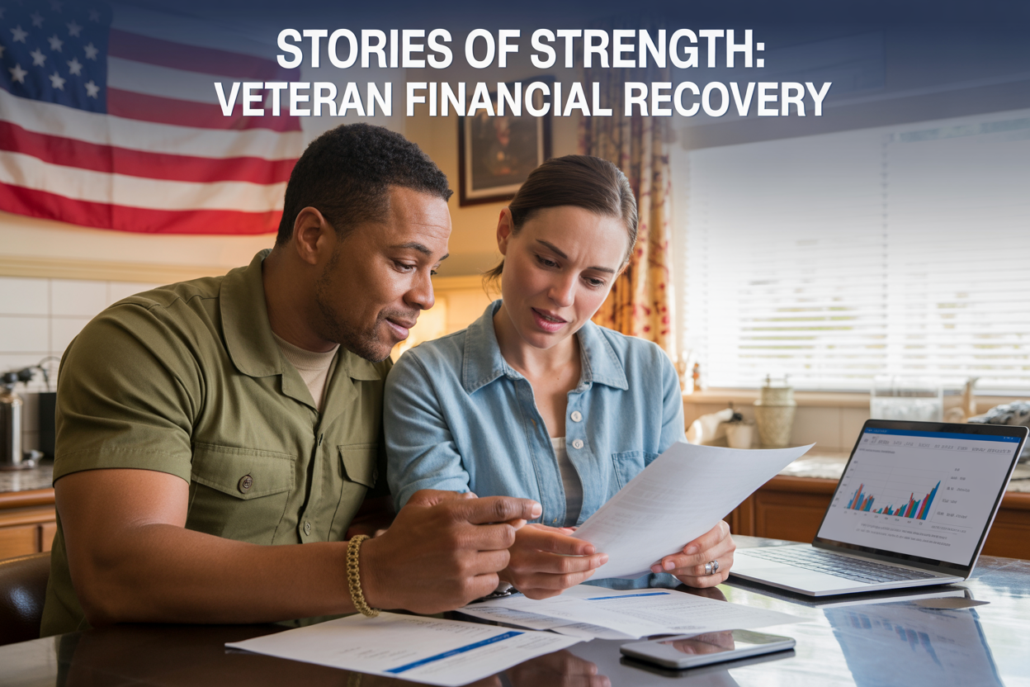
Military families face unique financial challenges that civilian families rarely encounter. From deployment-related expenses to transitioning back to civilian careers, veteran families’ financial hardship affects thousands of service members and their loved ones every year.
This guide is for veteran families currently struggling with debt, military spouses seeking financial stability, and any service member ready to take control of their financial future. You’ll discover real stories from families who’ve overcome serious money problems and practical steps you can take starting today.
We’ll explore the most common financial obstacles veteran families encounter and why traditional budgeting advice often falls short for military households. You’ll hear inspiring recovery stories from real military families who’ve paid off crushing debt and rebuilt their savings from scratch. Finally, we’ll cover the specific financial resources available to veterans that most families don’t know about, plus proven strategies for creating lasting wealth that works with the unpredictable schedule of military life.
These aren’t just success stories—they’re roadmaps showing exactly how other families like yours turned their financial situation around.
Understanding Financial Challenges Faced by Veteran Families
Common Debt Burdens from Military Service Transitions
Military families often carry unique debt burdens that their civilian counterparts rarely encounter. Service members frequently accumulate credit card debt during deployments when separation allowances don’t fully cover dual household expenses. Young enlisted personnel may have taken on high-interest loans to purchase vehicles before understanding their long-term financial impact. The military’s Permanent Change of Station (PCS) moves create additional financial strain through temporary lodging expenses, storage costs, and the challenge of selling homes in unfavorable markets.
Military families’ financial struggles often intensify when service members separate without adequate financial preparation. Veterans may discover that their military benefits don’t transfer seamlessly to civilian life, leaving gaps in income while carrying the same debt load. Many veteran families’ financial hardship stems from rushed financial decisions made amid the uncertainty of military transitions, including taking on debt to establish civilian households before securing stable employment.
Employment Gaps and Income Instability Issues
The transition from military to civilian employment creates significant income volatility for veteran families. Military occupational specialties don’t always translate directly to civilian job markets, forcing veterans to accept entry-level positions despite years of leadership experience. This income reduction occurs precisely when families need financial stability most.
Military spouses face additional employment challenges due to frequent relocations and gaps in work history. Professional licenses often don’t transfer between states, forcing spouses to restart careers repeatedly. The unemployment rate among military spouses remains significantly higher than the national average, contributing to veteran families’ financial hardship throughout and after military service.
Geographic limitations compound these employment struggles. Veterans may find themselves in locations with limited job opportunities that match their skill sets. Remote work options, while growing, still don’t fully address the specialized nature of many military occupations. This geographic mismatch between skills and opportunities creates prolonged periods of underemployment or unemployment.
Medical Expenses and Disability-Related Costs
Healthcare costs represent a major financial challenge for veteran families, particularly during the transition from military to civilian medical coverage. While VA benefits provide access to healthcare, navigating the system takes time, and coverage gaps can lead to significant out-of-pocket expenses. Family members aren’t automatically covered by VA healthcare; veterans must obtain and pay for additional insurance.
Service-connected disabilities create ongoing financial burdens beyond direct medical costs. Home modifications for accessibility, specialized transportation needs, and adaptive equipment expenses add up quickly. These costs often emerge before disability compensation claims are processed and approved, creating immediate financial pressure on already struggling families.
Mental health treatment costs particularly impact veteran families. PTSD, depression, and adjustment disorders require ongoing professional support that may not be fully covered by insurance plans. Family counseling, specialized therapy programs, and residential treatment options frequently require significant financial investment while families are already dealing with reduced income from disability-related employment limitations.
Housing Market Struggles and Foreclosure Risks
Veterans face unique housing market challenges that increase their risk of foreclosure. Military families often purchase homes using VA loans in markets near military installations, which can be volatile and dependent on base operations. When service members separate, they may find themselves in areas with limited civilian employment opportunities, but unable to sell their homes without significant losses.
The timing of military transitions rarely aligns with favorable housing market conditions. Veterans may be forced to sell during market downturns or face foreclosure when civilian employment doesn’t provide sufficient income to maintain mortgage payments. VA loan benefits, while valuable, don’t protect against job loss or income reduction after separation from military service.
Rebuilding after a financial crisis, veterans often struggle with damaged credit from previous foreclosures or short sales, making it difficult to secure affordable housing in new locations. This creates a cycle in which housing instability compounds employment challenges: veterans may need to relocate for job opportunities but lack the credit scores required for rental approval or to purchase a new home.
Real Stories of Financial Recovery from Military Families
From Bankruptcy to Business Ownership Success
Sarah Martinez never thought she’d file for bankruptcy at 34, but a series of unexpected events changed everything. Her husband’s military deployment coincided with their daughter’s serious illness, creating a perfect storm of medical bills and lost income from Sarah’s inability to work. The couple watched their savings disappear and their credit cards max out before making the difficult decision to file for Chapter 7.
Two years later, Sarah owns a thriving virtual bookkeeping business serving small contractors. The transformation began when she connected with SCORE, where a mentor helped her recognize that her experience as a military spouse in managing household finances during deployments had given her valuable skills. She used the VA’s VR&E program to earn her bookkeeping certification while her husband provided childcare between shifts.
The key breakthrough came when Sarah stopped viewing bankruptcy as a failure and began to see it as a clean slate. She built her client base by serving other veteran families facing financial hardship, gaining firsthand insight into their unique challenges. Her business now generates $65,000 annually, and she’s hired two other military spouses as contractors.
Overcoming Medical Debt Through Strategic Planning
When Army veteran Mike Thompson was diagnosed with a rare autoimmune condition, the medical bills started piling up despite having VA healthcare coverage. Specialized treatments, travel costs for appointments at distant VA facilities, and his wife taking unpaid leave created a $40,000 debt mountain that seemed impossible to climb.
Mike and his wife, Jennifer, took a systematic approach to tackle their military family’s financial recovery. They began by requesting itemized bills from all providers and identified $8,000 in duplicate charges and billing errors. Next, they negotiated payment plans with each creditor, explaining Mike’s veteran status and medical condition. Most providers reduced the amounts by 20-30%.
The couple also applied for financial hardship programs through the hospitals and pharmaceutical companies. Jennifer discovered that Mike’s medication manufacturer offered a patient assistance program that covered 80% of prescription costs. They redirected the $600 monthly medication savings directly toward debt repayment.
Within 18 months, they’d eliminated the medical debt entirely. The experience taught them to maintain a dedicated medical emergency fund and to always advocate for themselves when dealing with healthcare billing. Mike now volunteers with other veterans navigating similar medical debt situations.
Career Pivot Stories Leading to Financial Stability
After 12 years as a Marine logistics specialist, James Rivera struggled to find civilian work that would support his family of four. His military experience didn’t translate easily to civilian job descriptions, and he spent eight months unemployed, draining their emergency savings and accumulating credit card debt.
James’s breakthrough came when he stopped seeking a direct equivalent to his military role and instead focused on the underlying skills he’d developed. A career counselor at the local American Job Center helped him realize that his logistics background was well-suited to supply chain management in the growing e-commerce sector.
He enrolled in a six-month supply chain certification program using his GI Bill benefits while working part-time at a warehouse. The combination of his military discipline, problem-solving abilities, and new certification landed him a position with a regional distribution company at $58,000 annually – 40% more than his military pay.
Marine spouse Lisa Chen faced her own career challenges when frequent military moves prevented her from building a traditional career path. After her husband’s retirement, she leveraged her part-time experience into a consulting business that helps companies develop remote work policies. Her unique perspective as someone who’d successfully worked remotely across multiple states became her competitive advantage.
Lisa’s consulting business now generates $75,000 annually, demonstrating that the adaptability military families develop can become a significant professional asset. She regularly speaks to other military spouses about transforming their diverse experiences into marketable skills, helping them see their unconventional career paths as strengths rather than obstacles.
Essential Resources and Support Systems Available
VA Financial Assistance Programs and Benefits
The Department of Veterans Affairs offers comprehensive financial support through multiple programs to assist veteran families experiencing financial hardship. The VA’s Disability Compensation provides monthly payments to veterans with service-connected injuries or illnesses, often serving as a crucial income source during tough times. Veterans who qualify can receive between $165 and over $3,800 per month, depending on their disability rating and family size.
The VA Home Loan Program is one of the most valuable benefits, allowing veterans to purchase homes with no down payment and at competitive interest rates. For families facing foreclosure, the VA offers loan modification programs and financial counseling to prevent home loss. Veterans can also access the Veterans Pension Program, which provides need-based financial support to wartime veterans with limited income.
Military spouse financial planning gets additional support through the Survivors and Dependents Educational Assistance Program, helping families invest in education as a path to financial stability. The VA also provides grants for specially adapted housing modifications, which can reduce monthly expenses for disabled veterans.
Non-Profit Organizations Offering Emergency Relief
Numerous charitable organizations specialize in providing financial assistance to veterans during crises. Operation Homefront delivers emergency financial aid for rent, utilities, car repairs, and other urgent expenses, often processing applications within 72 hours. The Armed Services Relief Societies – Army Emergency Relief, Navy-Marine Corps Relief Society, Air Force Aid Society, and Coast Guard Mutual Assistance – provide interest-free loans and grants to active duty and veteran families.
Fisher House Foundation covers lodging costs when veterans receive medical treatment away from home, reducing financial strain on families. Veterans Community Foundation focuses on preventing homelessness by paying rent and utility bills, while Military Child Education Coalition helps families afford school supplies and educational expenses.
The Gary Sinise Foundation provides specially adapted smart homes for severely wounded veterans, eliminating mortgage payments and reducing long-term housing costs. These organizations often work together, creating a network of support that addresses multiple financial challenges simultaneously.
Military Family Life Counselors and Financial Guidance
Military Family Life Counselors (MFLCs) provide confidential support to help families navigate financial stress without impacting military careers. These counselors offer practical budgeting assistance, debt management strategies, and emotional support during financial crises. They connect families with appropriate resources and help develop realistic financial recovery plans.
Veteran financial resources include access to Accredited Financial Counselors through various military support services. These professionals specialize in military pay systems, deployment finances, and transition planning. Many installations offer Financial Readiness Groups that provide education on topics such as building an emergency fund, debt consolidation, and investment basics.
The Military Family Readiness Council coordinates financial education workshops covering everything from basic budgeting to advanced investment strategies. Personal Financial Management Programs on military bases offer one-on-one counseling sessions that help families create personalized action plans to rebuild after the financial crisis veterans face.
Peer Support Networks and Veteran Communities
Veteran families’ wealth-building often accelerates through peer support networks where families share strategies and resources. Team Red, White & Blue creates local communities where veterans and their families build relationships and share practical financial advice. Veterans of Foreign Wars posts frequently organize financial literacy workshops led by successful veteran entrepreneurs.
Online communities such as RallyPoint and Veterans.com host forums dedicated to financial discussions, where families share real experiences with debt relief programs and recovery strategies. These platforms allow veterans to connect with others who understand military-specific financial challenges, from PCS moves to deployment cycles.
Local veteran service organizations create mentorship programs pairing financially stable veteran families with those experiencing hardship. These relationships provide accountability, practical advice, and emotional support throughout the recovery process. Many communities also organize financial-planning meetups where veteran families learn together about topics such as retirement planning, college funding, and small-business development, creating lasting support networks beyond the initial crisis period.
Proven Strategies for Rebuilding Financial Foundation
Emergency Fund Creation on Limited Income
Building an emergency fund can feel impossible when you’re already stretched thin, but for veteran families, financial recovery often starts with this crucial step. Start small – even $5 per week adds up to $260 over a year. Military families know the value of discipline and incremental progress from their service experience.
Set up automatic transfers on payday to treat your emergency fund as a non-negotiable bill. Many veterans find success using the “pay yourself first” approach, moving money to savings before expenses hit. Consider opening a separate high-yield savings account to make your money work harder while staying accessible.
Look for creative ways to boost contributions without feeling the pinch. Collect loose change, save on tax refunds, or redirect one small expense, such as a subscription service. Military spouses often organize savings challenges within their communities, turning emergency fund building into a supportive group effort.
Even $500 can prevent a minor setback from becoming a major financial crisis. That small buffer protects against overdraft fees, prevents credit card debt, and provides breathing room during unexpected expenses.
Debt Consolidation and Payment Plan Tactics
Veteran debt relief programs offer specialized options that civilian families don’t have access to. Start by contacting your creditors directly – many companies have military-specific hardship programs with reduced interest rates or extended payment terms.
Debt consolidation can consolidate multiple payments into a single, manageable monthly payment. Personal loans through military-friendly lenders often provide better rates than credit cards. VA-backed loans sometimes allow cash-out refinancing to consolidate high-interest debt at lower mortgage rates.
The debt snowball method works particularly well for military families who thrive on clear objectives and measurable progress. List debts from smallest to largest, paying minimums on everything while attacking the smallest balance first. Each paid-off debt builds momentum and frees up money for the next target.
Contact nonprofit credit counseling services that specialize in financial challenges for military families. These organizations provide free debt management plans and negotiate with creditors on your behalf. They understand military pay structures, deployment cycles, and unique challenges veteran families face during financial recovery.
Skills Training Programs for Career Advancement
Your military experience already provides valuable skills; the key is translating them into civilian career advancement. VA Vocational Rehabilitation programs offer up to 48 months of education benefits, covering tuition, supplies, and monthly housing allowances while you train for new careers.
Community colleges often offer fast-track certification programs in high-demand fields such as IT, healthcare, and skilled trades. Many programs specifically recruit veterans and offer flexible schedules that work around family obligations. Some employers partner with these schools, guaranteeing job interviews or placement upon completion.
Online learning platforms provide affordable skills training that fits busy schedules. Focus on certifications in growing industries like cybersecurity, project management, or digital marketing. These credentials often lead to immediate salary increases or promotion opportunities.
Don’t overlook apprenticeship programs that pay while you learn. Many trade unions actively recruit veterans, offering competitive wages during training and excellent job security afterward. These programs respect military experience and provide clear advancement paths.
Side Income Opportunities Leveraging Military Experience
Military experience opens doors to lucrative side income opportunities that civilian families can’t access. Security consulting, corporate training, and emergency preparedness planning all value military expertise and pay premium rates for knowledgeable professionals.
Freelance work in your military specialty generates immediate income. Former logistics specialists excel at supply chain consulting, while communications experts often build successful technical writing or social media management businesses. Veterans with leadership experience frequently become executive coaches or business consultants.
The gig economy offers flexible options that work around primary employment. Many veterans succeed with ride-sharing during peak hours, delivery services, or task-based platforms like TaskRabbit. Your reliability and strong work ethic – hallmarks of military service – make you an ideal candidate for repeat customers.
Teaching or tutoring leverages your expertise while helping others. Military spouses often start online tutoring businesses, teaching everything from foreign languages learned during overseas assignments to professional skills gained in service. These businesses can grow from side hustles into full-time income sources.
Consider starting a YouTube channel or blog about your military experience, transition journey, or specialized knowledge. Monetization through ads, sponsorships, and affiliate marketing takes time to build but creates passive income that supports long-term financial stability for veteran families.
Long-Term Wealth Building Techniques for Veteran Families
Investment Strategies Tailored for Military Personnel
Military families have unique advantages when building long-term wealth, starting with the Thrift Savings Plan (TSP). This federal retirement system offers incredibly low fees and matches contributions up to 5% of basic pay. Veterans should maximize this benefit by contributing at least enough to get the full match—it’s literally free money.
The TSP’s lifecycle funds automatically adjust risk based on your target retirement date, making them perfect for busy military families who don’t have time to constantly monitor investments. For those wanting more control, the C Fund (which tracks the S&P 500) has historically provided strong long-term returns.
Beyond the TSP, veterans can open Roth IRAs to supplement their retirement savings. Since military pay often falls in lower tax brackets, paying taxes now through Roth contributions usually makes more sense than deferring them. Combat pay exclusion also creates opportunities to contribute tax-free earnings to retirement accounts.
Real estate investment trusts (REITs) are well-suited for military families who move frequently but want real estate exposure without the hassle of being landlords. Index funds offer broad market exposure with minimal fees, making them well-suited to the “set it and forget it” approach used during military deployments.
Dollar-cost averaging through automatic investments helps smooth out market volatility while building disciplined saving habits. Military families should aim to invest 15-20% of their income for long-term wealth building, leveraging steady military paychecks to build consistent investment habits.
Education Benefits Maximization for Family Members
The GI Bill is one of the most valuable benefits for building wealth among veteran families, but many families don’t use it strategically. The Post-9/11 GI Bill covers full tuition at public universities and provides monthly housing allowances, creating opportunities to graduate debt-free while building wealth.
Smart families treat education benefits as wealth-building tools. Instead of using benefits immediately, veterans can work while their spouse uses transferred benefits to earn a degree. This approach maintains income while eliminating education debt, creating a double financial advantage.
The Yellow Ribbon Program extends benefits to private schools, sometimes making expensive universities affordable. Some schools participate so generously that veteran families actually come out ahead financially compared to attending public institutions.
Military spouses can use MyCAA scholarships to pursue certifications and licenses in high-demand fields such as healthcare, IT, and project management. These programs often lead to immediate income increases and better job portability across military moves.
State-specific veteran education benefits can stack with federal programs. Some states offer additional tuition assistance, fee waivers, or even stipends that supplement federal benefits. Texas, for example, has the Hazlewood Act, which can cover remaining costs after federal benefits are exhausted.
Timing matters when transferring GI Bill benefits to family members. Veterans must serve additional time after transferring benefits, but strategic timing can maximize the family’s total educational value while maintaining military benefits.
Home Ownership Pathways Using VA Loan Programs
VA home loans offer veteran families one of the most powerful wealth-building tools available: zero—down—payment home purchases with no private mortgage insurance. This benefit alone can save families tens of thousands of dollars compared to conventional loans.
The key advantage goes beyond just buying a home. VA loans allow families to build equity from day one rather than pay rent. Over time, this equity becomes a significant portion of family wealth, especially when combined with property appreciation.
VA loans can be reused multiple times, making them perfect for military families who move frequently. Veterans can buy a home, live in it during their assignment, then rent it out when they move and use their VA loan benefit again at their next duty station. This strategy builds a real estate portfolio over a military career.
The funding fee (typically 2.3% for first-time use) can be rolled into the loan, though disabled veterans are exempt from this fee entirely. Even with the funding fee, VA loans typically cost less overall than conventional loans because of competitive interest rates and no PMI requirement.
Some veterans use VA renovation loans to buy fixer-uppers at below-market prices and use the loan proceeds to fund improvements. This approach can create instant equity while securing affordable housing in desirable neighborhoods.
Cash-out refinancing through VA loans lets veteran families access home equity for other investments or major expenses at favorable rates. This flexibility makes VA loans powerful tools for long-term financial planning beyond homeownership.
Multi-unit properties (up to 4 units) qualify for VA loans, provided the veteran occupies one unit. This creates immediate rental income while building equity, effectively letting the VA loan benefit subsidize investment property purchases.
Veteran families face unique financial challenges that can feel overwhelming, but the stories shared here prove that recovery is possible with the right approach. From understanding common financial challenges to learning proven strategies that work, military families have access to specialized resources and support systems designed for their needs. The real-life examples show how families moved from financial crisis to stability by leveraging veteran benefits, creating realistic budgets, and building emergency funds.
The path to financial wellness takes time, but veteran families have already shown they know how to overcome tough situations. Start by connecting with veteran financial counselors and exploring the benefits you’ve earned through your service. Whether you’re dealing with debt, saving for the future, or planning for retirement, remember that asking for help is a sign of strength, not weakness. Your military training taught you discipline and perseverance – now it’s time to apply those same skills to building a secure financial future for your family.
As a respected Wounded Veteran Charity, Operation Family Fund provides essential financial relief and recovery assistance to Injured Veterans and their families. Our mission is centered on compassion, empowerment, and lasting impact for those who’ve served our country. Discover more through Is the PACT Act Failing Our Heroes? The Truth About Veterans’ Benefits and see how we’re continuing to stand beside America’s heroes every step of the way.