Comprehensive Crisis Intervention: What Veteran Families Need Within the First Six Months
Recognizing the Critical First Six Months After Military Service
Leaving the military is rarely a single moment in time. It feels more like a slow-motion tectonic shift that impacts every corner of your life, from how you wake up in the morning to how you view your bank account. For many families, the first six months are the most volatile.
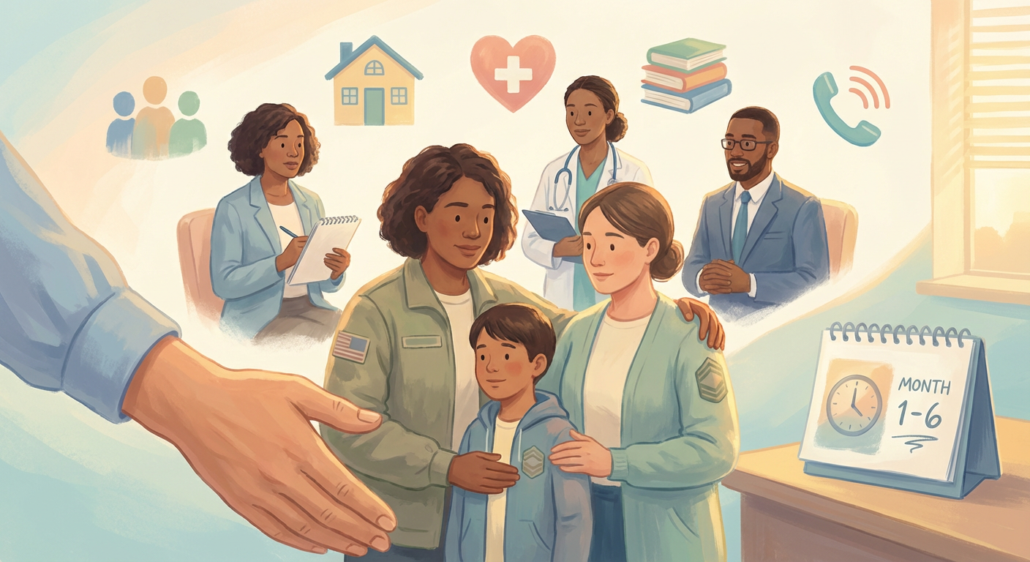
This timeframe represents a high-stakes period of transition where the structure of the military vanishes, replaced by the often confusing and decentralized world of civilian systems. Without the safety net of the command structure, small gaps in planning can quickly widen into significant financial and emotional chasms.
You might find that the skills which made you successful in uniform don’t immediately translate to the local job market. This creates a friction point that affects not just the veteran, but the entire household. Understanding that this window of time is a specific phase of vulnerability is the first step toward successful veteran crisis intervention. We see this often at operation family fund, where early intervention prevents temporary setbacks from becoming permanent hardships for those who served.
Understanding the Transition Timeline and Its Emotional Impact
The first 180 days after separation are frequently referred to as the “honeymoon-to-hardship” arc. Initially, there is a sense of relief and excitement. You finally have control over your schedule, your hair length, and your daily attire.
But as the weeks turn into months, the lack of a clear mission can lead to a profound sense of isolation. This emotional weight isn’t just “blues” (it’s often a deep grieving process for a lost identity).
During this period, many veterans struggle with the loss of their tribe. In the military, your social circle and your professional circle are the same. When you leave, both disappear simultaneously. This double loss can lead to depression or anxiety, which often masks itself as irritability or withdrawal. It is during these months that seeking specialized veteran family support becomes vital, as families need tools to communicate through the fog of this identity shift.
Financial pressures usually peak around month four. This is when terminal leave pay usually runs out and the reality of private-sector healthcare costs or property taxes starts to hit. If you are waiting on claims, checking on pact act 2025 is essential to ensure you are receiving the compensation you earned. Feeling financially squeezed while simultaneously feeling emotionally untethered is a recipe for a military family crisis that requires a proactive approach to solve.
Common Warning Signs That Require Immediate Attention
How do you know when a situation has moved from “normal stress” to a brewing crisis? One of the most common red flags is a sudden change in sleep patterns or personal hygiene. If a veteran who was always “squared away” starts neglecting their appearance or staying up until 4:00 AM every night, they are likely struggling to process the transition. These behavioral shifts are often the first outward signs that the internal pressure is becoming unmanageable.
Financial red flags are equally telling. Are you choosing which utility bill to pay this month? Are you relying on high-interest credit cards to cover basic groceries? When a family begins navigating life after, they might encounter unexpected costs that deplete their savings faster than anticipated. If you find yourself in this position, it is time to reach out to a Wounded Veteran Charity for guidance before the debt becomes insurmountable.
Other warning signs include:
- Increased reliance on alcohol or substances to “switch off” at night.
- Hyper-vigilance or extreme reactions to minor household inconveniences.
- Withdrawal from family activities or hobbies once enjoyed.
- Expressing feelings of being a burden to the family.
How Family Dynamics Shift During Early Civilian Adjustment
For years, the military dictated where you lived, when you worked, and how your family moved. Your spouse may have become the primary “manager” of the household during deployments. Now that you are home 24/7, those established roles can clash.
You might feel like a guest in your own home, or worse, like an intruder in a well-oiled machine that functioned fine without you. And this friction is actually quite common.
Children also experience this shift. They may have high expectations for “reintegration,” thinking life will be perfect once Mom or Dad is home for good. When the veteran is instead stressed, job hunting, or dealing with physical pain, the children may feel confused or rejected. Helping your family through this means being honest about the challenges. We’ve found that bridging the gap between military and civilian life requires a whole-family approach, not just focusing on the person who wore the boots.
Communication styles often need a complete overhaul. The direct, authoritative tone used in a unit doesn’t always go over well at the dinner table. If you’re feeling a strain, remember that your family is transitioning too. They are learning how to live with the civilian version of you, just as you are learning how to be that person. Don’t be afraid to ask for help from a Wounded Veteran Charity if the household stress feels like it’s reaching a breaking point.
The Difference Between Normal Adjustment and Crisis Situations
It’s important to distinguish between the natural “bumps in the road” and a full-scale crisis. Normal adjustment involves some frustration with the VA, a few bad job interviews, and some awkward social interactions at the grocery store. This is standard.
You’ll get through it with time and patience. But a crisis is different because it involves an immediate threat to your stability, health, or safety.
A crisis situation exists when you are facing an eviction notice, when the lights are about to be turned off, or when your mental health prevents you from basic functioning. In these moments, you cannot wait for the “standard” process. You need an intervention that provides immediate relief. Many don’t realize that they can donate to injured to help fund the very grants that keep families off the streets during these critical six months.
If you find that your bank account is negative and you have no clear path to your next meal, you are in a crisis. If your domestic arguments are escalating into physical or extreme emotional safety concerns, you are in a crisis. Recognizing this distinction is not a sign of weakness; it is a tactical assessment of your current situation.
Transitioning is the hardest mission you’ll ever undertake, and sometimes that mission requires calling in support from organizations built to have your back. You served your country with honor, and now it is the community’s turn to ensure you and your family have the resources to build a stable, successful civilian life.
Immediate Response Strategies for Veteran Families in Crisis
Creating a Family Safety Plan and Emergency Contacts
Crisis doesn’t wait for a convenient time to strike. When you find yourself in the middle of a high-stress situation, your brain’s ability to process complex information drops significantly. This is why having a physical, written safety plan is vital for every military household. You shouldn’t be searching for a phone number or trying to remember a protocol when emotions are running high.
Start by identifying your “inner circle” of contacts who understand the unique dynamics of military life. This list needs to go beyond just 911. Include a trusted battle buddy, a local chaplain, or a representative from a wounded veteran charity who can provide immediate guidance. Write these numbers down on a card and place it in a common area like the kitchen or near the front door.
Your plan should also outline specific exit strategies if an environment becomes unsafe for children or partners. Decide ahead of time where each family member will go and how they will get there. By creating this roadmap during a period of calm, you remove the guesswork from a high-pressure moment. It’s about building a defensive perimeter around your family’s well-being before a threat ever arrives.
De-escalation Techniques That Work in Military Households
Veterans are often trained to react with speed and decisiveness, which is a strength in combat but can create friction during a domestic crisis. De-escalation in a veteran home requires a shift in communication styles. One of the most effective tools is the “tactical pause,” which involves stepping away from a heated discussion for a set period, usually 20 minutes, to let cortisol levels drop.
Focus on using “I” statements rather than “you” statements to avoid making the veteran feel like they are being interrogated or attacked. For example, say “I feel overwhelmed when the house is loud” instead of “You are making too much noise.” This subtle shift reduces the likelihood of a defensive response. Many families find that using recognizing the signs of mounting stress allows them to intervene before a full-blown crisis erupts.
Environmental triggers play a huge role in military household tension. If you notice a family member becoming agitated, try changing the sensory input in the room. Dim the lights, turn off the television, or suggest a walk outside.
Physical movement often helps process adrenaline that might otherwise manifest as anger or withdrawal. These small adjustments can keep a situation manageable and prevent a minor disagreement from spiraling into something much worse.
When to Seek Professional Help vs. Family-Based Solutions
Knowing when to handle a situation internally and when to call in experts is a critical skill for veteran families. Minor financial hiccups or routine transition stress can often be managed through family meetings and budgeting. However, if you see patterns of substance abuse, talk of self-harm, or physical violence, these are clear indicators that professional intervention is required immediately. You don’t have to carry the weight of a clinical crisis on your own shoulders.
If the veteran is struggling with severe PTSD symptoms that lead to isolation or persistent nightmares, family support alone may not be enough. Accessing modern tools like access to mental services can provide a bridge to professional care without the stress of a long commute. These resources are designed to supplement family care, not replace the love and support you provide at home.
Don’t wait until the situation is catastrophic to reach out. Early intervention often prevents the need for more drastic measures later on. If you find that your usual coping mechanisms—like exercise or talking things out—are no longer working, it is time to consult a specialist. Seeking help is an act of tactical intelligence, ensuring your family has the best possible resources to win the battle against transition fatigue.
Coordinating with VA Resources and Community Support Networks
The VA system can be daunting, but it remains a primary pillar for long-term stability. Successful crisis intervention involves connecting with a Patient Aligned Care Team (PACT) to ensure all medical and psychological needs are being met. But the VA shouldn’t be your only resource. Local nonprofits and community groups often provide the rapid response that larger government agencies might struggle to deliver in the moment.
Many community-based programs specialize in immediate needs like housing or emergency financial grants. Working with a donate to injured funded organization can help fill the gaps while you wait for VA benefits to process. These groups understand that a veteran family in crisis cannot wait three months for a paperwork review. They provide the “boots on the ground” support that keeps families afloat during the most difficult weeks of transition.
Building a network also means looking at proactive community solutions for those facing housing uncertainty. By coordinating your efforts between federal benefits and local charity support, you create a safety net with no holes. This multi-layered approach ensures that if one resource falls through, another is already in place to catch you. Remember, managing a crisis is a team effort, and you are the commander of that team.
Building Your Support Network During the Transition Period
Connecting with Other Veteran Families in Your Community
Isolation acts as a silent force that often pulls families apart during the first six months after a major life change or service-related injury. You might feel like your neighbors cannot relate to the specific rhythm of military life or the unique weight of post-service recovery. Finding others who have walked similar paths provides an immediate sense of relief that no clinical manual can truly replicate.
Engaging with a wounded veteran charity or local support group allows you to share experiences about navigating the VA system or managing the household while a spouse recovers. These local connections offer practical help, such as recommending a mechanic who respects veterans or sharing which schools in the area best support military kids. Bonding with people who speak your language reduces the mental load of constant explanation.
Community integration should happen as soon as possible after a crisis. Whether it is a formal veteran coffee morning or an informal park meetup, these interactions build a safety net that catches families before they fall into despair. It is not just about social time, it is about creating a survival network of peers who understand that some days are harder than others without you having to say a word.
Identifying Reliable Mental Health Professionals with Military Experience
Searching for a therapist who understands the nuances of military culture can feel like an uphill battle when you are already dealing with a crisis. You shouldn’t have to explain what a PCS is or what it means to be downrange while you are trying to process trauma. Finding a professional who specialized in veteran care ensures that your sessions are productive from day one rather than spent educating the provider.
Many families find that traditional talk therapy is only one piece of the puzzle. Exploring how service dogs can offer alternative paths for those who struggle with standard clinical settings. These animals provide non-verbal support and a sense of routine that helps stabilize a home environment during the most turbulent months of transition.
Check for providers who accept your specific insurance and have high ratings from other military families in your circle. Use your priority period to vet multiple specialists if the first one doesn’t feel like a good fit. The goal is to build a long-term relationship with someone who recognizes the specific triggers and stressors inherent in the veteran experience, allowing for more effective interventions when stress levels spike.
Leveraging Veteran Service Organizations and Their Resources
Veteran Service Organizations (VSOs) are the backbone of the transition process, but many families only use a fraction of what they offer. These groups provide more than just paperwork assistance, they offer specialized programs that address employment, legal needs, and emergency financial help. Accessing these services early can stop a minor financial dip from turning into a long-term housing crisis.
When you work with a wounded veteran charity, you gain access to advocates who know how to navigate the complexities of federal and state benefits. They can guide you through the application process for rapid re-employment or temporary disability increases. This professional guidance ensures you don’t miss deadlines that could result in months of lost income or delayed medical care for your family.
Beyond the paperwork, many organizations offer specialized workshops that teach financial stability and career pivot strategies. Taking advantage of these resources within the first six months provides a structured roadmap for the future. You don’t have to figure out every step of the post-military journey alone when there are established organizations designed specifically to carry some of that weight for you.
Creating Accountability Systems Within Your Extended Family
In the wake of a crisis, extended family members often want to help but don’t know how to be useful without being intrusive. Creating a formal accountability system helps distribute the burden of care and logistical management. This might mean assigning one person to track medical appointments while another handles grocery runs or school pickups for the children.
Clear communication is the most effective tool for preventing family burnout during a high-stress period. Highlighting resources like breaking stigma with your relatives helps them understand the mental health challenges you might be facing. It allows them to provide better emotional support because they are educated on the symptoms and needs of the veteran in the house.
Set up a weekly check-in or use a shared digital calendar to keep everyone on the same page regarding the family’s needs. This structure prevents the primary caregiver from becoming overwhelmed and ensures that the veteran feels supported rather than watched. Remember that you can always donate to injured organizations to help others build these same types of networks for their own families during reaching out for help.
Ultimately, your extended family is your first line of defense against the weight of a long transition. When they are integrated into a system of accountability, they become a source of strength rather than an additional source of stress. This collaborative approach allows the veteran and their spouse to focus on the immediate needs of recovery while the logistics of daily life are handled by a dedicated team of loved ones.
Practical Tools for Daily Crisis Management
Communication Strategies That Honor Military Structure and Civilian Needs
Moving from a command-driven environment to a civilian household requires a total shift in how you talk to your spouse and children. In the military, communication is often direct, task-oriented, and based on a clear hierarchy. This works wonders in the field, but it can create unnecessary tension at the dinner table where emotional nuance matters just as much as the mission.
You might find yourself barking orders or expecting a level of discipline from your teenager that just isn’t realistic for a civilian kid. It’s helpful to recognize that your family isn’t a platoon. They need to hear your thoughts and feelings, not just your directives. Try to replace “get this done now” with “it would really help me if we could tackle this together today.”
Active listening is a skill that many veterans have to rebuild from scratch. It involves truly hearing what your partner says without immediately jumping to tactical solutions. Sometimes your spouse just needs to vent about their day, and they aren’t looking for a series of sit-reps or a plan of attack. Taking the time to validate their perspective helps bridge the gap between your two worlds.
If you feel overwhelmed by the noise or the lack of structure at home, don’t be afraid to say so. Setting up “check-in” times that mimic a morning brief can provide a sense of familiarity while allowing everyone to voice their needs. This structured approach helps maintain order while ensuring that the civilian need for connection is also being met by every family member.
Managing Financial Stress During Employment Transitions
The gap between your last paycheck from the military and your first civilian salary can feel like a deep canyon. This period often triggers significant anxiety, especially if you haven’t secured a new position before the terminal leave ends. High stress levels can cloud your judgment, making it harder to stay focused on the job hunt itself.
One of the best moves you can make is to aggressively prioritize your spending the moment you decide to leave the service. Look at your fixed costs like housing and utilities first. If the numbers aren’t adding up, seeking external support from a wounded veteran charity can provide the bridge you need to keep your family stable while you interview.
Managing your money is about more than just numbers on a spreadsheet; it’s about emotional peace of mind. Discussing your budget openly with your partner prevents the “financial secrets” that often lead to arguments. By identifying the specific costs of your transition, you can create a realistic plan that accounts for everything from new work clothes to commuting expenses.
Many veterans find that building financial stability requires a mix of belt-tightening and professional guidance. Don’t wait until your savings account hits zero to ask for help. Early intervention is the key to preventing a temporary cash flow issue from becoming a long-term debt problem that follows you for years after your service ends.
Helping Children Cope with a Parent’s Adjustment Challenges
Children are incredibly observant, and they can sense when a parent is struggling even if you think you’re hiding it well. When a veteran returns to civilian life, kids often deal with their own version of “re-entry shock.” They might be confused by a parent who is suddenly home all the time but seems mentally distant or easily frustrated.
Age-appropriate honesty is your best tool here. You don’t need to share every detail of your service or your current stress, but you can explain that you are learning a new “job” as a civilian. Tell them that if you seem tired or quiet, it isn’t because of anything they did wrong. This simple reassurance can prevent a child from internalizing the family’s stress as their own fault.
Consistency is the greatest gift you can give your kids during a crisis. Even if your internal world feels chaotic, try to keep their bedtime and weekend activities the same. If you are struggling with physical or mental health issues, seeing you take steps to heal teaches them about resilience. They need to see that it’s okay to ask for help when things get tough.
Encourage your children to express their feelings through drawing, playing, or talking. Sometimes they just want to know that you are still the same “mom” or “dad” they remember. If you notice your child becoming withdrawn or acting out, it might be time to contact us at Operation Family Fund to see what resources are available for the entire unit.
Maintaining Routine While Adapting to New Civilian Schedules
In the military, your schedule was largely decided for you. In the civilian world, that lack of structure can actually be a major source of stress. Without a morning formation or a set physical training time, it’s easy for the days to bleed together, leading to a loss of motivation or a decline in physical health.
Start by creating your own “Duty Roster” for the home. Set a specific time to wake up, a specific time to work on job applications, and a specific time to exercise. Physical movement is a powerful tool for managing transition stress, so don’t let your fitness routine slide just because you aren’t being told to run five miles at dawn.
When you donate to injured through various programs, you are often supporting initiatives that help families find their new normal through structured coaching. Routine provides a safety net. It gives you small wins throughout the day, which are vital for rebuilding your confidence after leaving a high-stakes military career behind for something less predictable.
Remember that your civilian schedule doesn’t have to look like your neighbor’s. If you work best in the evening, build your routine around that. But whatever you choose, stick to it. Consistency reduces the number of decisions you have to make daily, which lowers your cognitive load and leaves you with more energy to focus on your family’s long-term health and happiness.
Long-term Recovery and Family Resilience Planning
Setting Realistic Expectations for the First Year of Transition
The initial six months of veteran crisis intervention usually focus on immediate physical and financial safety. But you shouldn’t expect everything to be perfect just because the primary crisis has stabilized. True recovery for a military family crisis often takes a full twelve to eighteen months to find a baseline rhythm.
Many families find that the adrenaline of the transition wears off around month seven or eight. This is when the reality of civilian life truly sets in, and it’s perfectly normal to feel a second wave of stress. You aren’t failing if you feel overwhelmed during this period, you’re simply adjusting to a massive life shift.
Understanding these milestones helps you stay grounded when things feel slow. It’s helpful to look at the first year in quarters rather than months. If you’ve secured housing and initial employment, the next phase is about refining those situations and finding community connections that stick. Professional organizations like a wounded veteran charity provide resources that help bridge these gaps as you move toward long-term stability.
Keep your expectations flexible. Some weeks will feel like you’ve conquered the civilian world, while others might feel like you’re back at square one. By setting realistic timelines, you reduce the internal pressure to “be fixed” immediately. Remember that your service didn’t happen in a vacuum, and your transition won’t either.
Developing Family Goals That Support Individual Recovery
Recovery is rarely a solo mission. While the veteran might be the one with the primary injury or diagnosis, the entire household is affected by the shift in dynamics. You need to develop family goals that acknowledge everyone’s needs without sacrificing the individual’s progress.
Start by having an honest conversation about what “winning” looks like for your household. Maybe it’s sitting down for dinner four nights a week without discussing medical appointments. Or perhaps it’s saving a specific amount of money to ensure financial stability for the kids’ future activities. These goals provide a shared sense of purpose that keeps the family unit cohesive.
It helps to align these objectives with the specific veteran family support resources available to you. If one goal is to improve the home environment, learning about operation family can show you how different types of assistance can be used to meet varied family needs. You aren’t just looking for a handout, you’re looking for a hand up that benefits every person under your roof.
Individual recovery should be a component of the family plan, not the entire plan itself. When the family sets a goal together, it removes the “patient” and “caregiver” labels for a moment. It allows you to relate to each other as partners and parents again. This shift in perspective is vital for emotional health and long-term resilience.
Creating Sustainable Self-Care Practices for All Family Members
Self-care isn’t a luxury, it’s a requirement for survival in a post-service environment. We often see caregivers and spouses push themselves to the point of total exhaustion. But you can’t provide effective support if your own tank is completely empty.
Sustainability is the keyword here. Going to a spa once a year isn’t a self-care strategy. A sustainable practice is something you can do for fifteen minutes every day. This could be a morning walk, a hobby that has nothing to do with the military, or simply a dedicated time for quiet reflection.
- Identify one daily “non-negotiable” activity for every family member.
- Rotate household responsibilities to prevent one person from carrying the entire load.
- Permission to say “no” to outside commitments that add unnecessary stress.
- Regular check-ins to see who is feeling burnt out before it reaches a crisis level.
Encourage your children to participate in this as well. They need to see that taking care of their mental and physical health is a priority. When the whole family values rest and recovery, the home becomes a sanctuary rather than a source of stress. This foundation of health makes it easier to donate to injured or volunteer in your community later, knowing your own house is in order first.
Planning for Setbacks and Continued Growth Beyond Six Months
The road to recovery is never a straight line. You will encounter setbacks, whether it’s a medical flare-up, a change in employment, or an unexpected bill. The difference between a setback and a catastrophe often comes down to the plan you have in place before the trouble starts.
Think of this as your “civilian contingency plan.” You should have a list of emergency contacts, a small savings buffer, and a clear understanding of where to go for help. If you find your family facing a new financial hurdle that threatens your stability, knowing how to apply can prevent a temporary issue from spiraling into a permanent crisis.
But planning isn’t just about avoiding the negatives. It’s also about fostering growth. What do you want your life to look like in two years? Five years? Use the momentum from your successful first six months to start dreaming again. Transitioning out of service is often about leaving something behind, but long-term recovery is about building something new.
Stay connected with veteran communities and support networks even when things are going well. These relationships provide a safety net that you might not need today, but will be grateful for tomorrow. Continued growth requires consistent effort and a willingness to adapt as your family’s needs change over time. You’ve already survived the hardest part, now you’re building the future you earned.
Resources and Next Steps for Veteran Families
Essential Phone Numbers and 24/7 Crisis Support Lines
When you are in the middle of a mental health or financial emergency, every second feels like a lifetime. You shouldn’t have to hunt for a phone number when things are falling apart. The first step in any veteran crisis intervention strategy is knowing exactly who to call when you hit a breaking point.
The Veterans Crisis Line is the most critical resource available for immediate intervention. By dialing 988 and pressing 1, or texting 838255, you can connect with qualified responders who understand military culture. They are available 24/7, 365 days a year, to assist with mental health concerns or thoughts of self-harm. You can also reach out to the Be There Peer Support line at 844-357-2436 if you just need to talk to another veteran who has been in your shoes.
Financial emergencies often require a different type of rapid response. If you are facing eviction or utility shut-offs, calling 211 can connect you with local municipal resources. However, for specialized help, reaching out to a dedicated wounded veteran charity can often provide the specific grant or bridge funding needed to stabilize your household. These organizations work outside the slow bureaucracy of government agencies to provide faster relief.
Keep these numbers saved in your phone or posted on your refrigerator. Having them visible can lower the anxiety of your spouse or children because they will know there is always a plan in place. Quick access to these lines can be the difference between a manageable setback and a total family collapse.
Navigating VA Benefits and Healthcare Systems Efficiently
The VA system is massive and can be incredibly intimidating for a family already dealing with the stress of a recent injury or discharge. To get what you earned, you have to be persistent and organized. Start by securing your DD-214 and medical records in a digital format so you can share them instantly when requested. Documentation is the currency of the VA, and having it ready speeds up the process significantly.
Working with a Veteran Service Officer (VSO) is one of the smartest moves you can make. These professionals are trained to understand the fine print of federal regulations and will help you file claims for disability or pension benefits correctly the first time. This reduces the likelihood of “request for evidence” delays that can stall your income for months. While wait times for medical appointments are a known issue, using the Mission Act can sometimes allow you to see a private doctor in your local community if the VA cannot see you within a specific timeframe.
For those struggling with substance use or deep-seated trauma, specialized care is often required. Facilities like the lighthouse recovery offer focused environments where veterans can heal among peers. These centers understand that military-related trauma requires a unique approach that standard civilian hospitals might miss. Integrating these specialized recovery options into your healthcare plan ensures you aren’t just treating symptoms but are addressing the root causes of the crisis.
Don’t be afraid to advocate for yourself or your spouse. If a claim is denied, the appeals process exists for a reason. Most successful claims are the result of persistence rather than luck.
Stay in constant communication with your VSO and keep a log of every person you speak with at the VA. This paper trail is invaluable if you ever need to escalate a concern to a regional office or a patient advocate.
Community Programs Specifically Designed for Veteran Families
A veteran family support network should extend beyond federal benefits. Local nonprofits, churches, and civic groups often have programs that fill the gaps left by larger institutions. These might include food pantries, pro-bono legal clinics for veterans, or even organizations that provide free home repairs and modifications for those with service-connected disabilities.
Many communities now offer “Veteran Treatment Courts” for those who have legal issues stemming from their service. These programs focus on rehabilitation rather than punishment, providing a path toward stability. Additionally, career transition programs can help you or your spouse find meaningful employment that respects your military background while providing a sustainable wage. Finding a job is often the most effective form of long-term crisis prevention.
Peer-to-peer groups for spouses and children are equally important for the health of the entire family unit. Programs like the Elizabeth Dole Foundation offer specific support for caregivers, helping them avoid the physical and emotional exhaustion that comes with long-term care. When the family feels supported, the veteran has a much higher chance of successful recovery and reintegration into civilian life. Supporting a wounded veteran charity helps ensure these local programs remain funded and accessible to families in your area.
Look for “Veteran Stand Downs” in your city. These events are one-stop shops for medical screenings, dental care, and social services. They are designed to bring resources directly to you in a low-pressure environment. Building these community ties creates a safety net that catches you before a financial or emotional slip turns into a full-blown emergency.
How to Honor Your Service Member’s Legacy While Moving Forward
Respecting the past while building a future is a delicate balance. It is common to feel a sense of loss for the person the service member was before an injury or a traumatic experience. Honoring their legacy doesn’t mean staying stuck in those memories, but rather using the values of service, integrity, and resilience to fuel your family’s next chapter. This mindset shift is a vital part of military family crisis recovery.
One way to honor that legacy is through service to others. Many families find that volunteering or participating in community events helps them regain a sense of purpose. Whether it is mentoring younger veterans or helping at a local shelter, giving back can be incredibly therapeutic.
It reminds you that despite your current struggles, you still have value and strength to offer the world. Your service didn’t end when you took off the uniform; it just changed its form.
Planning for a stable future is also a way of honoring your service. By seeking financial stability and mental health wellness, you are ensuring that the sacrifices made during your time in uniform were not in vain. If you are in a position to help others, understanding how to make to support your fellow veterans can be a powerful way to turn your own experiences into a force for good. Generosity has a way of healing the giver just as much as the receiver.
You may also choose to donate to injured to help those who are just beginning their first six months of transition. Sharing your story or your resources creates a chain of support that strengthens the entire veteran community. Moving forward isn’t about forgetting what happened; it’s about carrying those experiences into a life defined by growth rather than trauma. You have survived the hardest days, and now it is time to build a life that reflects the courage you’ve shown throughout your military career.